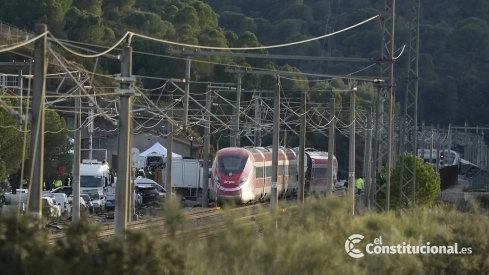
The criminal investigation into the Adamuz (Córdoba) train accident is now in the hands of Investigating Court Number 2 of Montoro, as explained by journalist and lawyer Antonio Gómez de Olea on RTVE's 'Malas Lenguas' program.
Judicial sources cited by Gómez de Olea indicate that "this criminal investigation is already in the hands of the investigating judge of Court No. 2 of Montoro", and that the magistrate has spent "most of the day at the scene of the accident", supervising the initial actions to "obtain all the authorization for the exhumation and identification of the bodies".
In parallel, the **Judicial Police of the Civil Guard** is carrying out **"fundamental work for this investigation,"** focusing on the **collection of evidence** such as **"testimonies from railway personnel, testimonies from those affected, or photographs of what happened,"** as detailed by Gómez de OleaCompendium
The judicial procedure includes the collection of forensic and police information, as well as the centralization of data on the victims. In addition, the Railway Accident Investigation Commission (CIAF) is conducting a technical study of the accident and sending its reports to the court for evaluation. Based on these documents, the investigating judge can take statements from those affected and the victims' families, decide whether to open proceedings against specific individuals, and order new tests or additional investigations to be carried out.
Once the reports are prepared, "they will be forwarded to the Public Prosecutor's Office", which will assess "if there are criminal indications for a criminal investigation", while "the final word rests with the investigating judge", according to Gómez de Olea
This process marks the starting gun for what will be a long judicial journey and could lead to the opening of proceedings for serious offenses, such as reckless homicide, depending on the data collected in the reports.