A Night of Triumphs for Cinema Supported by RTVE
In the XIII Feroz Awards, held this Saturday in Pontevedra, films in which RTVE participated triumphed with a total of 11 awards, in a ceremony that was also broadcast live on La 2 and RTVE Play.
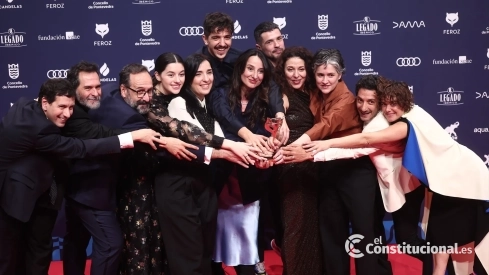
The film The Sundays, directed by Alauda Ruiz de Azúa, was the big winner of the night, taking home five key awards: best dramatic film, best director, best screenplay, in addition to the awards for best lead actress for Patricia López Arnaiz and best supporting actress for Nagore Aramburu.
Other notable successes
In addition to *Los domingos*, other productions involving RTVE also shone at the ceremony:
-
Maspalomas received two awards, including the statuettes for best leading actor (José Ramón Soroiz) and best supporting actor (Kandido Uranga), thanks to the outstanding performances of its cast.
-
La cena was recognized as best comedy film, an award that highlights the success of lighter proposals within Spanish cinema.
-
Ciudad sin sueño, by Guillermo Galoe, took home the Arrebato Award for Fiction, celebrating social cinema with non-professional protagonists.
-
The documentary Tardes de Soledad, by Albert Serra, was awarded best poster and the Feroz Holded Arrebato Award for Non-Fiction.
A benchmark for the audiovisual industry
The ceremony, organized by the Spanish Film Journalists' Association (AICE), consolidated the diversity of Spanish cinema and the strength of productions supported by public radio and television, which range from intense dramas to documentaries and comedies.
The results of these awards also help to shape the most outstanding works in the run-up to the Goya Awards 2026, which will be held on February 28 in Barcelona and where several of these productions are considered favorites.
A controversial speech
Samantha Hudson's speech was, above all, a **mix of social criticism and acid humor**. At the cultural event, Hudson used her time on stage to **bring up issues that are usually discussed in political or activist spaces**, which generated **significant media attention**.
His way of speaking—which resorted to irony and exaggeration as tools of criticism—worked to contrast complex or painful realities with simplistic perceptions and discourses. This technique provoked both support and rejection: some saw in his words a brave message that invites reflection on unjust blame, while others interpreted them as a controversial-ironic mix to move political debates to a stage that many could perceive as inappropriate for them.
In any case, the virality of fragments of her monologue demonstrated that, beyond cinema, figures like Hudson can **become catalysts for public conversation on issues that concern broad sectors of society**
She did it at the closing of LGTBIQ+ Pride
— Más Madrid | LGTBIQ+ 🏳️🌈🏳️⚧️ (@MasMadridLGTBIQ) January 25, 2026
She did it at the MADO awards ceremony
She has done it again at the Feroz awards ceremony
Samantha Hudson must always be listened to 👇 pic.twitter.com/MrRdYqyWbh