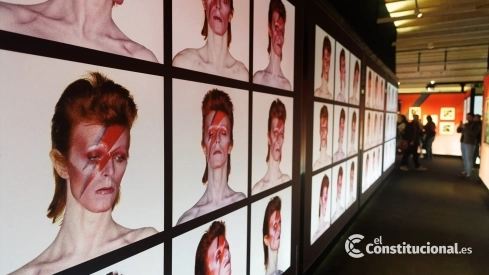
January 10th marks the tenth anniversary of the death of British artist David Bowie. Mutable, multifaceted, and always groundbreaking. Bowie left an indelible mark on the legacy of music, fashion, and popular culture worldwide. The chameleonic star of 'glam rock'.
After learning of the tragic prognosis that would cost him his life, Bowie set out to create what would be his artistic testament: 'Blackstar', released just two days before his death. An intimate reflection that the artist left us on life and death, loaded with symbolism, musical experimentation, and enigmatic lyrics that speak of transformation, farewell, and the freedom to reinvent oneself until the last moment. A characteristic trait of Bowie.
During the first half of the 70s, Bowie lived alongside a British society marked by rigidity, absurdly strict codes of conduct, and conservative morals. It was precisely at that moment that David Bowie burst forth with disruptive force to challenge everything established. His early television appearances and his style broke with what was settled: defiant, ambiguous, and provocative. From 'Ziggy Stardust' to the 'Thin White Duke', each of his characters built their own universe, where music, fashion, and personality intertwined to surprise and wound the sensibilities of those who rejected progress.
New Me
In 1976, Bowie moved to Germany to distance himself from the spiral of fame, sex, drugs, and alcohol he was immersed in in his native country. In West Berlin, he found a space of freedom to explore new sounds and artistic perspectives. There he shared time and influences with Iggy Pop, with whom he collaborated and mutually inspired each other, immersed himself in the city's nightlife, and composed the so-called "Berlin Trilogy": Low (1977), "Heroes" (1977), and Lodger (1979), albums that would mark a before and after in contemporary music. Each album reflected his ability to choose between the familiar to squeeze it until it transformed into a completely new expression of music
Among the many disciplines in which Bowie excelled, we could also mention that of actor. His historic role in 'Labyrinth' (1986) showed his talent for embodying an enigmatic character who combines mystery, music, and enchantment. The film has become a fantasy film classic, becoming a key piece of influence for filmmakers of future generations and consolidating him as an artist capable of making an impact beyond music.
His influence, in fact, transcends any discipline: Bowie left his mark on fashion, film, theater, and pop culture in general. His relationship with the trans artist Romy Haag and his exploration of gender identity broke all molds and transformed the perception of beauty and sexuality in his time. Decades after his death, his legacy remains relevant, and iconic songs like 'Heroes' continue to resonate. The song, recorded in West Berlin just 150 meters from the Wall, was born when Bowie saw two lovers kissing fearlessly in the street and became an anthem of hope and resistance in a divided world. His renewing force and holistic capacity have made him transcend generations. His appearance in the teen series 'Stranger Things' has caused a significant increase in streams among young people, opening the door for them to discover the infinite creative universe of David Bowie.