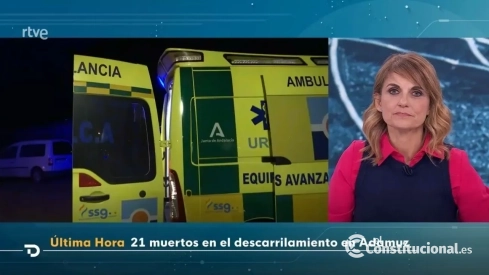
On Sunday, January 18, La 1 of RTVE became the center of attention of the night thanks to a news special on the train accident in Adamuz (Córdoba), which has left at least 39 dead and dozens injured. The coverage, presented by Lourdes Maldonado, reached a 11.9% share and nearly a million viewers, far surpassing the competition in prime time and offering live press conferences and constant updates on the unfolding tragedy.
While the official coverage kept the audience informed, controversial and unfortunate reactions emerged on social media. At a specific moment during the special, the presenter smiled, which some users took advantage of to question the seriousness of the coverage in a tweet that quickly went viral. These criticisms, directed at authorities, media, and professionals alike, occurred before the official conclusions on the causes of the derailment were known. The situation reflects how any gesture, however small, can become the subject of debate on social media and the growing trend in these spaces to radicalize discourse by criticizing with decontextualization, misinformation, and hoaxes.
The RTVE presenter while they tell us that there are 10 deaths in Adamuz. pic.twitter.com/PHyxdbwi4U
— David Santos (@davidsantosvlog) January 18, 2026
RTVE's special program continued until the early morning, standing out for its focus on verified information and attention to victims, contrasting with the rapid viralization of opinions and comments not always verified on digital platforms. The situation has highlighted the responsibility of the media and authorities in the face of sensitive real-time information, both from the presenter and TVE's news services, as well as the public's attention to an event that has Spain on edge
