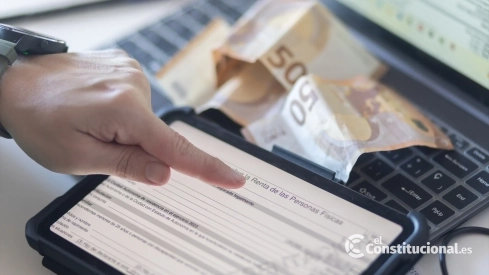
The 2025 income tax declaration campaign, which is filed this year 2026, is about to begin. As every year, millions of taxpayers will have to settle accounts with the Tax Agency in a process that once again concentrates between the months of April and June.
Last year, about 25 million people carried out this procedure, according to data from the Tax Agency. And this year comes with some new features, in addition to key dates that should be very clear from the beginning to avoid errors or last-minute rushes.
Key dates for the 2025 Income Tax declaration
The period for filing the declaration extends between April and June, but there are several important milestones that mark the start of the procedures and the different deadlines available.
Access to tax data is enabled on March 18, at which point taxpayers can consult the information that the Tax Agency has through its electronic headquarters or the official application.
A few days before, on March 11, the possibility of requesting the reference number opens, necessary to manage the declaration. To obtain it, it will be necessary to use box 505 of the income of the previous fiscal year.
The campaign officially starts on April 8, when the declaration can already be submitted online. From then on, other assistance services are activated: on April 29 the period to request a telephone appointment begins, and on May 6 telephone assistance begins.
For those who prefer to go in person, the prior appointment can be requested from May 29, while in-person service will begin on June 1.
Last days to file the tax return
The calendar also clearly sets the deadlines. June 25 will be the last day to file the return if the result is to pay with direct debit.
In the rest of the cases, the deadline is extended until June 30, which will be the definitive date to file the income tax and also the wealth tax.
How to request an appointment to make the declaration
Those who need help from the Tax Agency must request a prior appointment. This procedure can be done easily both online, through the electronic headquarters or the official app, as well as by phone.
The system allows choosing between telephone or in-person attention, according to the taxpayer's preferences. The deadline to request an appointment will be open until the end of June.
Who is obliged to file the income tax return?
One of the most frequent doubts has to do with the obligation to declare. In general, those people who have had income lower than 22,000 euros annually from a single payer and do not have other relevant income are not obliged.
However, the situation changes when there are several payers or certain tax circumstances. In those cases, the limit decreases and may oblige to file the declaration even with lower incomes.
As for people in a situation of unemployment, finally a general obligation to declare has not been established for the fact of collecting benefits, provided that the usual requirements are met.
Different is the case of those who receive the minimum vital income (IMV), who indeed must file the declaration, although in many cases the result is zero.
What if I earn the minimum wage?
For those who receive the minimum wage, the obligation to declare will depend on their specific situation. If the income comes from a single payer and does not exceed the established limits, it will not be necessary to file the tax return.
However, if there are several payers or certain tax conditions, the obligation may arise, even with income equivalent to the SMI.
Deductions for electric car and energy efficiency
The 2025 income tax campaign maintains some deductions that were already in force in previous tax years. Among them, those related to the purchase of electric vehicles, the installation of charging points, or improvements in energy efficiency in homes stand out.
These tax aids remain active and may be applied in the declaration corresponding to this exercise.
Main developments in the Income 2025
The campaign incorporates technical improvements that seek to simplify the process for taxpayers.
One of the most notable is the automatic management of data of ascendants and descendants in the Renta Web application, which will facilitate access to deductions without the need to manually enter all the information.
Also, the calculation of returns on rentals to family members is automated, a task that until now required additional operations by the taxpayer.
In the case of the self-employed, new boxes and adjustments are introduced in the model to reflect changes in contributions and subsidies.
Changes in the taxation of savings and new boxes
Another relevant development affects capital gains. New boxes are incorporated to declare prizes and the information related to products such as ETFs or SICAV is expanded.
In addition, the tax rate applicable to the highest savings income is modified. The upper bracket increases slightly, which will affect those who exceed certain income levels in this section.
