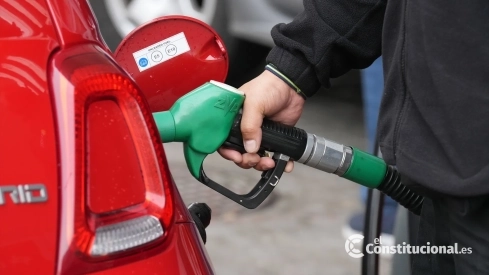
The price of gasoline in Spain is rising again and the Government has decided to intervene. After weeks of increase in the cost of fuel, the Executive has opted to release part of the strategic oil reserves with the aim of containing the escalation and reducing the pressure on consumers and key economic sectors.
The rising cost of fuel in recent weeks is explained, in large part, by the evolution of oil prices in international markets. This increase ends up being directly passed on to the final cost that consumers pay at service stations.
In this context, the price of gasoline becomes one of the most sensitive indicators of the economic situation, since any variation has an immediate impact on the daily expenditure of households.
The sustained increase in the cost of fuel has led the Government to take measures to try to curb this trend, given the risk that it continues to spread to the economy as a whole.
What does it mean to release strategic oil reserves
The release of strategic oil reserves is an unusual measure. These reserves function as a security system intended to guarantee supply in exceptional situations, but they can also be used to intervene in the market when prices rise significantly.
The objective of this action is to increase the amount of available oil, which can contribute to reducing pressure on fuel prices. Although its effect is not usually immediate, it can influence the evolution of the market in the short term.
This decision is framed within a scenario of tension in energy markets, where external factors condition price behavior.
The impact of the rising cost of fuel is already being noticed in daily life. Filling the tank now means a greater outlay than just a few weeks ago, which increases the monthly expense for many families.
This increase adds to other costs that have also experienced rises, such as electricity or mortgages. Together, these factors reduce the available margin in households and increase pressure on the budget.
The spending on transport, both for personal and professional use, is thus situated as one of the most sensitive elements within the domestic economy.
Transport and agriculture: the most affected sectors
The rising cost of fuel has a direct effect on sectors that depend intensively on the use of fuels.
In the case of transport, the increase in the price of diesel increases operating costs, which can be passed on to the final price of goods and services. This generates a chain effect that ends up impacting different areas of the economy.
Agriculture is also affected, since fuel is essential both for the use of machinery and for logistics. A sustained increase in price implies greater pressure on the profitability of the sector.
The Government's decision comes at a time when the economy presents certain stability, but with signs that point to possible tensions on different fronts.
The behavior of the energy market continues to be one of the key factors, as it directly influences the cost of living and economic activity.
Therefore, the evolution of the coming weeks will be decisive to evaluate the real scope of the measure adopted.
What can happen now with the price of gasoline
The release of strategic reserves seeks to alleviate pressure on short-term prices, but does not eliminate the causes that have led to the rise in fuel.
The oil market continues conditioned by external factors, which introduces uncertainty about the future evolution of prices.
In this scenario, the price of gasoline will continue to be one of the most visible indicators of the economic impact in the day-to-day life of citizens.
