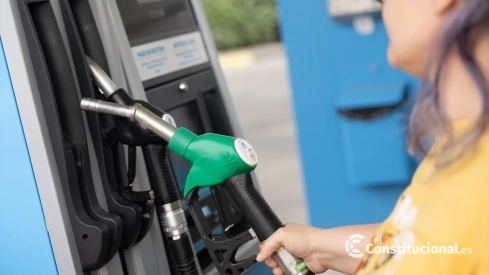
The price of gasoline in Spain rises sharply again and many drivers ask themselves the same question: why does it rise so fast… and why does it then take so long to fall. The answer lies in how oil costs are passed on to the consumer and in an economic phenomenon known as the “rocket and feather” effect.
Why the price of gasoline is rising
The main trigger is in the international oil market. The recent escalation of the conflict in the Middle East has generated uncertainty about the supply, which has caused an immediate increase in crude oil prices.
This type of geopolitical tensions has a direct impact on energy prices. In fact, as soon as the blockade of the Strait of Hormuz was announced, the price of fuel began to react almost immediately, with increases in a matter of hours.
In Spain, that effect has quickly transferred to the pump. In a few days, the price of diesel rose by more than 30 cents per liter, placing itself well above the levels prior to the start of the conflict.
The price of gasoline depends largely on the cost of oil, but not only on that. Factors such as also influence:
- Refining costs
- Transport and distribution
- Taxes
- Commercial margins
Even so, crude oil remains the central element. When it rises in international markets, service stations quickly adjust their prices to reflect that increase.
The “rocket” effect: rapid and immediate increases
One of the most visible aspects for consumers is the speed with which gasoline rises.
In economic terms, this is explained because companies anticipate the replacement cost of fuel. That is to say, they set prices taking into account how much it will cost to buy that product in the future, not just the price at which they acquired it previously.
That's why, when oil rises, the impact on gasoline is almost immediate.
The “feather” effect: why it takes so long to go down
The problem comes when oil goes down.
In that case, the price reduction at gas stations does not occur with the same speed. This asymmetric behavior is what is known as the “rockets and feathers” model: fast increases, slow decreases.
The explanation is in several factors:
- The stations sell first the fuel bought at higher prices
- There is a lag between the crude market and the final price
- Logistical and fiscal costs do not change with the same speed
All this makes the consumer perceive a clear difference: when it rises, it does so suddenly; when it falls, it takes weeks to be noticed.
This behavior has an immediate effect on the pocket. In a matter of days, the cost of filling the tank can increase significantly, which directly affects monthly household expenditure.
Furthermore, this rise not only affects those who use the car daily. It also impacts the transport of goods, which can end up being passed on to the price of other products.
Why it does not go down at the same pace
Although oil becomes cheaper, the system does not react automatically. Companies must adjust their costs, manage inventories, and adapt to a market that does not respond instantly.
That's why, even at times when crude oil falls, prices at gas stations can remain high for longer than expected.
The “rocket and feather” effect is not new. It has been repeated in different episodes of energy crisis and becomes evident again in the current context.
Every time there is a sharp rise in oil, prices react quickly. But when the situation stabilizes, the drop arrives much more gradually.
