The European Commission has presented a new energy measures package with the objective of alleviating the impact of the price increase on households and businesses. Under the name of ‘AccelerateEU’, the initiative proposes that member States reduce taxes on electricity, promote social tariffs and, in necessary cases, temporarily prohibit supply cuts to vulnerable consumers.
The plan arrives at a time of rising energy prices caused by instability in the Middle East, which has triggered the cost of fossil fuels and imports. According to data from the Community Executive, the European Union has incurred an additional cost of about 24,000 million euros in just 52 days, which has reactivated the urgency of coordinated measures at a European level.
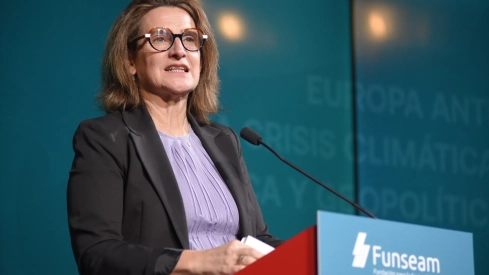
The Vice-President of the Commission for Clean Transition, Teresa Ribera, has defended that “energy cannot be used as an instrument of domination or war” and has underlined the importance of accelerating the transition towards clean sources. In her judgment, advancing towards a more autonomous and sustainable energy model is key to strengthening the economic security of the UE.
Among the most immediate measures, Brussels proposes facilitating direct aid to consumers, such as energy vouchers, subsidies to replace heating systems or tax incentives for technologies such as solar panels, heat pumps or electric vehicles. The possibility of reducing VAT on certain energy products to lower the bill is also contemplated.
In the medium term, the Commission wants to promote a structural change in the European energy system. To do this, it plans to present in May a proposal that allows reducing the tax burden on electricity compared to gas, thus promoting the electrification of the economy and reducing dependence on imported fossil fuels.
In addition, the package includes measures to strengthen supply security, such as coordination in filling gas reserves before winter or the creation of a European fuel observatory. With these initiatives, Brussels seeks to avoid tensions in the markets, anticipate possible crises and protect both consumers and industrial sectors most exposed to energy volatility.
