The escalation of tensions in the Middle East has led energy-consuming countries to activate an exceptional mechanism: releasing part of their strategic oil reserves. The measure has been agreed upon by the International Energy Agency (IEA), which coordinates 32 countries to respond to energy crises. The proposal seeks to alleviate the consequences of the blockade of the Strait of Hormuz -one of the most important oil routes in the world- by Iran and results in the largest release of reserves in its history, with 400 million barrels. But, why is emergency crude oil released? What consequences will it have for our country?
In the case of Spain, the third vice-president and minister for Ecological Transition and Demographic Challenge, Sara Aagesen, explained that it could release around 12 days or 12 and a half days of reserves. Currently our territory accumulates oil for about 92 days of supply. The contribution will be 11.5 million barrels.
Importance of the Strait of Hormuz
The trigger for the oil crisis is due to the blockade of the maritime passage between Iran and Oman, which connects the Persian Gulf with the Gulf of Oman and the Indian Ocean, perpetrated by Iran in response to the conflict between the regime, Israel and the United States.
According to data from the U.S. Energy Information Administration (EIA), agency of the U.S. Department of Energy, an average of 21 million barrels per day (mb/d) circulated through the strategic enclave in 2022, equivalent to 21% of global petroleum liquids consumption, mainly from Saudi Arabia, UAE, Kuwait, Iraq, Iran, and Qatar towards Asia (80%), Europe and the U.S. Similar figures for 2024-2025: ~20 mb/d (20% of maritime crude trade). The closure of this route caused a rise in oil prices, which exceeded 100 dollars per barrel in international markets.
How much oil Spain will release
Spain maintains strategic oil reserves, which are emergency deposits to use if there is an energy crisis, wars, supply problems. Currently, Spain has oil stored for approximately 92 days of the country's consumption. This means that, if oil from abroad suddenly stopped arriving, Spain could continue operating for about three months using those reserves.
When it is said that Spain will release reserves, it means that the Government will allow part of that stored oil to be sold or used in the market to increase supply. This is normally done to: lower or stabilize fuel prices; compensate for global supply problems; help other allied countries.
Within this international plan, Spain will contribute 11.5 million barrels from its strategic reserves. That amount is approximately equivalent to 12 days of national oil consumption.
What will happen with gasoline in Spain
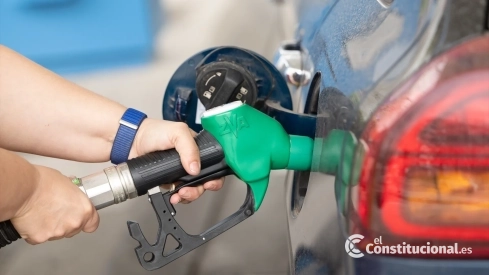
The impact on the pumps is not immediate. Gas stations usually sell refined fuel from oil bought weeks before, so the effect of the release of reserves can take between 15 and 30 days to be passed on to the consumer.
According to current estimates: gasoline could drop between 0.04 and 0.08 euros per liter and diesel between 0.05 and 0.10 euros per liter. This will depend on the price of crude oil falling between 5 and 10 dollars per barrel.
What it means for Spain in the short term
With the release of reserves, Spain seeks to avoid sharp rises in fuel and guarantee the supply while the crisis persists.
After contributing its part to the international plan, the country will continue to maintain around 80 days of reserves, a figure considered sufficient to face possible supply interruptions. Meanwhile, the Government is analyzing other support measures if the energy crisis prolongs.
