The PP has rejected this Saturday the option of promoting a grand coalition with the PSOE, considering that, with a President of the Government like Pedro Sánchez, "who is absolutely cornered by corruption and has led Spain into an institutional crisis, there is little to discuss".
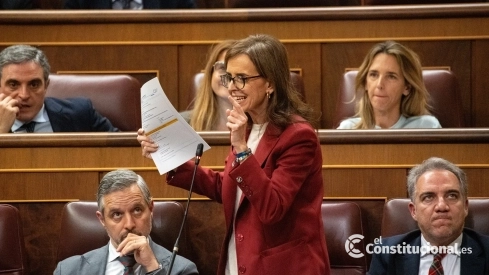
The deputy secretary of Health and Social Policy of the PP, Carmen Fúnez, has responded in this way to the statements of the spokesperson for the Interior of Sumar and IU in Congress, Enrique Santiago, who in an interview on RNE, expressed his concern about the support of the PSOE, together with the right-wing parties, for the law of repeat offenses and the possibility that the "grand coalition of Germany" could be "edited". Specifically, he warned that the PSOE "might be tempted to reach agreements with the PP and return to neoliberal policies".
"We are very clear right now, and the president of the PP, Alberto Núñez Feijóo, has said it on many occasions. With a president who is absolutely cornered by corruption, with a president and a government that has led our country to an institutional crisis, we have little to discuss," Fúnez added.
Likewise, the 'popular' leader has maintained that "the left to the left of the PSOE" should "first agree among themselves and see exactly what future they have", and has added that "the most worrying thing is that they have dedicated themselves since the last legislature to keeping a president cornered by corruption and to justifying it both from a political point of view and from a parliamentary point of view".
This Government no longer governs: it only holds on to stay in power. And the bill is paid by Spaniards in public services: railways, roads, housing… deterioration, chaos and abandonment. Lots of propaganda, zero management. pic.twitter.com/1doH8t6i4k
— Carmen Fúnez (@carmenfunezdg) February 14, 2026
"I believe that the leader of Izquierda Unida should be more aware of the supposed pacts they have rather than demanding that the Popular Party negotiate with the Socialist Party," Fúnez stated, emphasizing that these parties "have an essential problem" because there has never been a government "with so many ministers and so few votes, as is being seen election after election."
