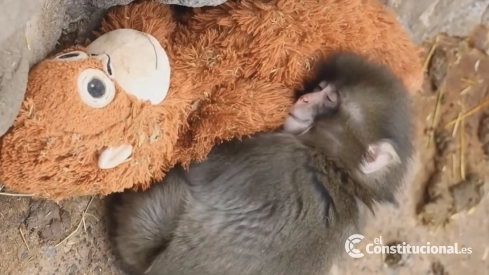
The Japanese macaque named Punch —also known as Panchi‑kun— has become one of the most touching viral phenomena of 2026. This six-month-old baby, who lives in the Ichikawa Zoological and Botanical Garden (Chiba, Japan), rose to fame on social media after appearing hugging and dragging an orangutan plush toy that the caregivers gave him as a substitute for his mother, who abandoned him after birth.
Punch's videos with his plush toy —affectionately named “Oran‑Mama” by fans in Japan— have accumulated tens of millions of views on platforms like TikTok, X and Instagram, making him a symbol of tenderness, loneliness and resilience.
This has completely ruined my day. I can't anymore 😭😭😭
— 🤠 (@heavensbvnny) February 19, 2026
Poor little Punch 🥺
As soon as the large monkey approached, little Panchi panicked. He tried to run, but before he could escape, he was pinned down and forced to the ground. The scene was so harsh that many people… pic.twitter.com/XYbeDRnAj4
Its story has also had repercussions outside of social media: the zoo has received a massive influx of visitors eager to see him in person, to the point that there have been long lines at the entrances. In fact, its virality has meant a good marketing campaign even for its plush toy, from the company IKEA, which has added on its website that the doll is being one of the best sellers in Spain and is sold out in other IKEA stores around the world. In fact, the company has recently taken the opportunity to donate more plush toys to the zoo for Punch.
Also, images have been disseminated in which Punch seems that he has finally been accepted by another adult member of his group, who offers him care and company, which many interpret as a positive step in his social integration within the macaque colony.
🚨| BREAKING NEWS: The little monkey Punch, now has an older monkey that protects him and even lets him ride on his back. ❤️🐒 Punch's evolution has been spectacular. pic.twitter.com/QGLlFMvKg8
— Eduardo Menoni (@eduardomenoni) February 22, 2026
The Punch phenomenon has captured global attention not only for its tenderness, but also for the debate it generates about animal welfare in captivity and the emotional connection that these primates can express, also functioning as a 'mirror' for millions of people around the planet, which has also led psychology and emotional care accounts to use the phenomenon to reflect on bonds and attachments.