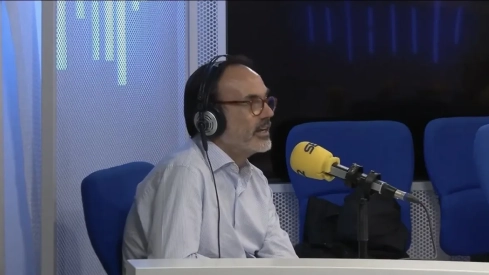
The case of José Luis Ábalos is at the center of the media spotlight amidst the celebration of the corruption trial against the former minister. In the debate starring Esther Palomera and Fernando Garea on 'Hora 25' from Cadena SER, both journalists disagreed on the political responsibility and the knowledge of his inner circle.
Palomera defended that it is necessary to differentiate between the personal life of the former minister and the possible crimes, stressing that “one thing is a disorderly or dissolute life and another is the alleged crimes”. Furthermore, he questioned that someone who commits irregularities would communicate them to their superiors, casting doubt on whether there was prior knowledge within the Government. For his part, Garea rejected this argument, considering that it minimizes the debate, and pointed out that Ábalos's standard of living “was incompatible with the positions he held”, suggesting that certain indications could have been evident. The clash of positions reflects the open debate on the extent to which there was political responsibility or lack of control.
Fernando Garea was particularly forceful when assessing the case, describing what is coming to light as “a true horror show”. The journalist focused on the political dimension of the matter, recalling that the former minister “was number 2 of the Socialist Party and the strongman of the Government”, and raised doubts about the lack of knowledge within the Executive: “did no one find out about all this?, did no one find out about the life he was leading?”. In this sense, he insisted that he was not referring to his intimate life, but to “the type of relationships of all kinds he had”, questioning how this situation could have occurred without consequences: “who assumes the political responsibility for all this having happened in a government without anyone, in theory, finding out?”.
🗣️ @Fgarea, about the Ábalos case: "It's a horror show. He was number 2 of the PSOE. Did no one find out about all this, about the life he was leading? Who assumes the political responsibilities?"
— Hora 25 (@Hora25) April 7, 2026
👉 https://t.co/6Hd1OMp0l0 pic.twitter.com/JJ6wTjkpdW