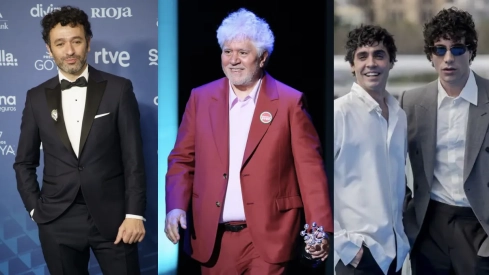
Spanish cinema has achieved a historic milestone at the Cannes Film Festival 2026, with three films in the official competition for the Palme d'Or, an unprecedented event that marks a before and after for the national industry. Directors Rodrigo Sorogoyen, Pedro Almodóvar and the creative duo known as Los Javis (Javier Calvo and Javier Ambrossi) present their most recent works in the main section of the festival, consolidating Spain as a benchmark for contemporary cinema.
In the case of Pedro Almodóvar, it is a return to the festival where he was a regular guest, after the Golden Lion obtained in Venice with The Room Next Door. This time, he arrives with a film already released in Spain, Bitter Christmas, validated by the box office and national critics. Almodóvar will walk the Croisette accompanied by a luxury cast: Bárbara Lennie, Aitana Sánchez Gijón, Leonardo Sbaraglia, Patrick Criado, Milena Smit and Victoria Luengo. This last Mallorcan actress is also the protagonist alongside Javier Bardem in The Loved One, the film that marks the entry into competition of Rodrigo Sorogoyen. Sorogoyen had already been in Cannes Premiere with As Bestas, a film that earned him a César, the equivalent of the Goya in France.
Perhaps the big surprise is The Black Ball, second film by Javier Calvo and Javier Ambrossi, who debut in Cannes after the phenomenon that was La Mesías on the French Arte channel. The film narrates the story of Federico García Lorca in three different eras and his assassination at the hands of the fascists. The red carpet promises to shine with names like Penélope Cruz, Glenn Close and Guitarricadelafuente, who join the international premiere of the film.
The presence of these three films in the official competition not only represents an artistic achievement, but also an international boost for the Spanish film industry. This year's edition of the festival, which is held on the French Riviera, will feature an international jury that will evaluate each proposal, and the announcement of the winners will take place during the closing ceremony, a moment awaited by filmmakers and fans worldwide.
With this historic trio, Spain consolidates itself as power in Cannes, demonstrating that its cinema combines talent, originality, and the ability to generate impact on a global stage. For the national industry, this achievement represents not only international visibility, but also the reaffirmation that Spanish cinema can compete head-to-head with the greats of the world scene.