The Ministry of Youth and Childhood has activated this Thursday in Ceuta a mobile team of eight specialized Save the Children professionals to reinforce the care of migrant minors. Their work will allow accelerating the evaluations of those already under guardianship and locating children and adolescents who still remain on the streets, exposed to aggressions and other situations of special vulnerability.
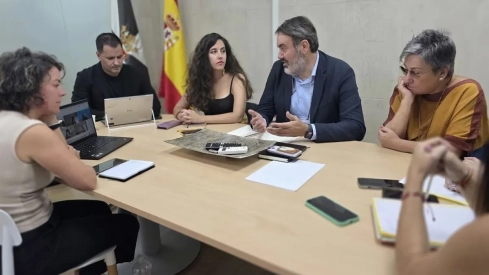
This is the first action of the Multidisciplinary Unit for the Care of Migrant Children in Emergencies (UMAIME), created to support territories whose protection systems are overwhelmed. The deployment was agreed upon during a meeting headed by the Secretary of State for Youth and Childhood, Rubén Pérez, and the Director General of Children's and Adolescents' Rights, Sandra de Garmendia.
The meeting was also attended by officials from the Ceuta Minors Area, UNICEF, and Save the Children. The coordination between the State, the autonomous city, and specialized organizations seeks to turn the identification of each minor into a concrete protection response, reducing waiting times that have hampered care since the massive entry at the end of July.
Half of the resources will be dedicated to interviews with children and adolescents who are already under guardianship. Specialists will analyze their family, health, and legal situation to facilitate referrals to other autonomous communities and determine which measure best suits each case.
Evaluations, transfers and street protection
Options include requesting international protection, family reunification, or reception within the Spanish system. These evaluations will also allow organizing available information and expediting transfers to the Peninsula, one of the main needs to free up places in Ceuta's centers and continue incorporating those who are still outside.
The other 50% of the work will be carried out directly on the streets. Professionals will search for children and adolescents who have not yet accessed any official resource, verify their needs, and try to remove them from possible situations of violence, exploitation, or trafficking. The National Police has already identified more than 2,000 minors, although administrations and social entities acknowledge that an undetermined number remain unregistered.
Save the Children had demanded this same week an "urgent" solution to the increase in aggressions against migrants. "The street is not a place for unaccompanied children or families with minors in their care, and in these circumstances of violence, less than ever," warned its migration specialist, Jenifer Zuppiroli.
The Government intends for the new unit to offer a stable response for this and future emergencies. "Faced with the humanitarian crisis, the ministry articulates a state response to support the territories of arrival," explained Rubén Pérez, who defended the UMAIME as a "structural and immediate" intervention tool.
The evolution of the device will be continuously reviewed by a committee made up of the Directorate General for Children's Rights and Adolescence, UNICEF Spain, and Save the Children. The eight specialists will begin working with fostered minors and on the streets of Ceuta, while the committee adapts resources to the needs that are detected.
Add ElConstitucional.es as a preferred Google source for free.
Stay informed about all the latest breaking news with the best information. Against disinformation, for democracy and social rights.
