The National Police has detected 97 possible telephone connections between the facilitators of the massive entry of migrants into Ceuta, which occurred at the end of last July, and members of the security forces and intelligence services of Morocco. This is stated in a new report from the National Immigration and Borders Center (CENIF), sent to the National Court judge investigating the events.
According to the document, investigators have identified indirect contacts between the administrators and facilitators of the WhatsApp groups used to disseminate the call and telephone numbers that could belong to Moroccan agents. The Police maintain that some of these contacts had in their agendas telephones with names or designations that would point to their relationship with security and intelligence institutions of the neighboring country. The report indicates that these communications could have been made through so-called "liaison profiles", people who would act as intermediaries between the promoters of the call and the members of the Moroccan structures. This system would have made it difficult to know who was behind the communications and to trace the contacts.
To try to identify the owners of the 97 numbers, investigators have resorted to open sources and have cross-referenced the data with different information databases, including that of the hacktivist group Jabaroot. As a result of these checks, CENIF claims to have obtained information on the possible identity of members of Moroccan security and intelligence structures on 49 occasions.
The police report and the CNI's position
CENIF's conclusions come after the National Intelligence Center (CNI) sent a report to the judge stating that it had not found evidence that Moroccan authorities were behind the massive entry into Ceuta.
The intelligence service maintains that, so far, there is no evidence to affirm that the events of July 30 and 31 were an action "instigated, planned or coordinated" by Morocco. Although it acknowledges that the authorities of the neighboring country were aware of the existence of calls on social networks, it has not been able to prove that they participated in their organization.
Furthermore, the CNI also states that it has not identified a cooperative relationship between the individuals that the Police link to the Moroccan security forces and the facilitators who spread the calls on the internet. A conclusion that introduces differences between the investigations of both agencies.
The massive entry in July, under investigation
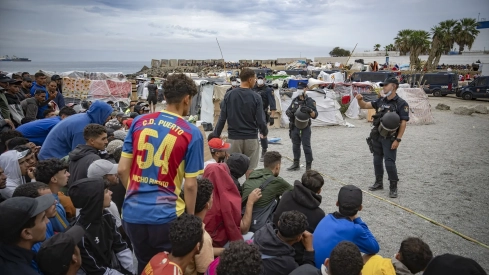
The events occurred on July 30 and 31, 2026, when thousands of people tried to cross from Morocco to Ceuta after calls were spread through social networks and messaging applications. The calls encouraged people to go to the border and spread among numerous users.
The judicial investigation seeks to clarify how the mobilization was organized, who participated in its dissemination and what role the people who facilitated or promoted the crossings could have played. Police and CNI reports are part of the investigations led by National Court judge María Tardón.
For the moment, the possible connections detected by the Police do not by themselves prove that the Moroccan State organized the massive entry. The investigation must determine whether these contacts played any role in the events and whether there was coordination between the digital facilitators and members of the institutions of the neighboring country.
Contact
We are listening. Get in touch.
