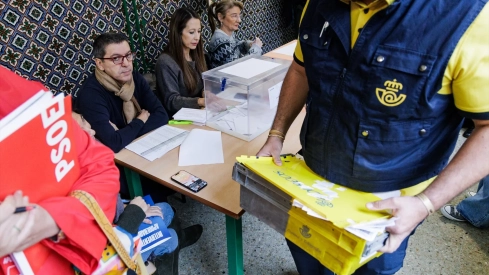
Voting for a candidacy is not the only option in the general elections of November 29. Blank votes, null votes, and abstention are often lumped together as discontent, but they do not have the same consequences on the outcome. These are the differences.
What is a blank vote?
A blank vote is casting an empty envelope in the case of the Congress, or an unmarked ballot for any candidate in the Senate. It is a valid vote: it is added to the total number of valid votes and, therefore, affects the distribution.
How does a blank vote affect parties?
To qualify for a seat, a candidacy needs at least 3% of the valid votes in its province. Since a blank vote counts as valid, it raises that threshold and makes it slightly more difficult for small parties to enter the distribution. It does not give seats to anyone, but it is not neutral either.
What is a null vote?
A vote is null if it cannot be correctly attributed: crossed out, torn, or written-on ballots, altered envelopes, ballots from two different candidacies in the same envelope, or a ballot that is not official. A null vote does not count for the distribution of seats or for calculating the 3%: it is registered, but it does not influence the result.
What about abstention?
Abstaining is not going to vote. It does not count in any sense, beyond the participation figure. The record for abstention in general elections was set by the repeat election of November 10, 2019, when 33.77% of the electorate stayed home. In July 2023, 66.59% voted.
Summary
- Blank: valid; raises the 3% threshold.
- Null: does not count for distribution.
- Abstention: only lowers participation.
Do you want to know when the data will be released? Check the key times of election night.
📌 Guide to the 29N general election
🗳️ Voting today
- Until what time can you vote today?
- Can you vote with an expired ID?
- How to vote for the Senate
- Polling station duty: what if you don't go
📊 Election night
- What time are the results announced?
- Exit polls: what time they come out
- Where to see the results by municipality
- Turnout: times and history
- Candidates and parties on 29N
🏛️ After 29N
Contact
We are listening. Get in touch.
