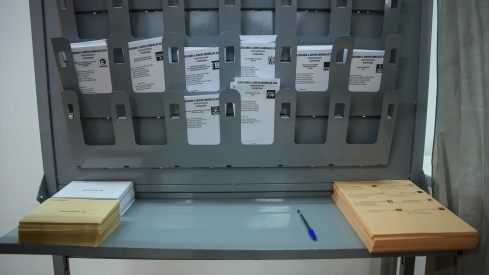
At 8:00 PM, the polls close and one of the most important and least known phases of the day begins: the vote count at each polling station. It is done by hand, in public, and in the presence of party representatives, and from it come the data that will appear tonight in the official scrutiny. This is how it works step by step.
1. Closing of voting at 8:00 PM
At 8:00 PM, the polling station president announces aloud that voting is about to end. Voters who are inside the polling place or at its entrance can still vote. Afterwards, the votes received by mail are introduced into the ballot boxes, after verifying that these voters are on the census and have not voted in person. Finally, the members of the polling station and the interveners vote.
2. First the Congress is counted, then the Senate
In a general election, the ballot boxes are opened in order: first the ballots for the Congress of Deputies are scrutinized, and then the votes for the Senate, which usually take longer because the crosses for each candidate must be counted.
3. Envelope by envelope, aloud
The president opens the envelopes one by one, reads aloud the name of the voted candidacy, and shows the ballot to those present. The members record the votes. The interveners and party representatives can request to examine any ballot if they have doubts.
4. Valid, blank, and null votes
During the count, the polling station decides which votes are valid, which are blank (empty envelopes), and which are null (for example, two ballots from different parties in the same envelope or ballots with cross-outs). What happens if you make a mistake with the ballot and when is the vote null.
5. Claims and protests
The interveners can submit claims about any vote or incident. Disputed or declared null ballots are not destroyed: they are attached to the minutes so that the Electoral Board can review them later. The rest of the ballots are destroyed once the count is finished, in the presence of those attending.
6. The scrutiny act
With the count finished, the polling station draws up the scrutiny act, with the number of electors, voters, valid votes, blank votes, null votes, and the votes for each candidacy. A copy is placed at the entrance of the polling place and another is given to the party representatives who request it, who can thus later check the official data.
7. From the polling place to the Ministry in minutes
At each table there is a representative of the Administration who transmits the results of the minutes to the data processing center of the Ministry of Interior. That is why the provisional data appear so quickly on the official website and app from 9:00 PM. Where to consult the results by municipality.
8. The documentation goes to the court
Afterwards, the president of the polling station and a member deliver the envelopes with the electoral documentation to the court, from where it is sent to the electoral boards. With it, the general scrutiny of Friday, December 4 is carried out, which sets the official result and adds the external vote. What is the CERA vote.
Can I go to see the count?
Yes. The scrutiny at the polling station is public: any citizen can witness it as long as they do not disturb the order. It is one of the guarantees of the Spanish electoral system, along with the presence of representatives from all parties and the delivery of copies of the minutes.
How long does the count take?
It depends on the size of the polling station and the number of voters. In small polling stations it can last less than an hour; in large ones, especially due to the Senate count, it can take much longer. That is why the first official data comes from small municipalities and the scrutiny progresses throughout the night. When will it be known who wins the elections?
If you have been selected to be part of a polling station, here's what you need to know: polling station on 29N.
📌 29N Election Guide
🗳️ To vote today
- Until what time can you vote today?
- Can you vote with an expired ID?
- How to vote for the Senate: the sepia ballot
- Blank vote, null vote, and abstention
- Polling station: what happens if you don't go
📊 Election night
- What time are the results known?
- Exit polls: what time are they released
- Where to see the results by municipality
- Participation: times and evolution
- Candidates and parties of 29N
🏛️ After 29N
Contact
We are listening. Get in touch.
