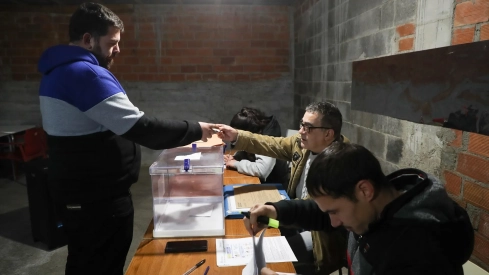
In the general elections this November 29, you vote twice: for Congress and for the Senate. The Congress ballot is a closed list, but the Senate ballot works differently and each year generates doubts in polling stations. This is how to vote for the Upper House without the vote ending up being null.
What is the Senate ballot?
It is the sepia-colored ballot, larger than the white Congress ballot. It lists all the candidates for the Senate of the province, grouped by party, with a box next to each name.
How many candidates can be marked?
In peninsular provinces, which each elect four senators, up to three candidates can be marked with a cross. It is not mandatory to mark three: one, two, or three can be marked, and they do not have to be from the same party. In island constituencies and in Ceuta and Melilla, which elect fewer senators, the number of allowed crosses is smaller and is indicated on the ballot itself.
Can candidates from different parties be voted for?
Yes. Unlike Congress, where a closed list is chosen, in the Senate the lists are open: the voter can combine candidates from different parties.
What makes a Senate vote null?
- Marking more crosses than allowed.
- Writing names, messages, or crossing out the ballot.
- Putting the Senate ballot in the Congress envelope, or vice versa.
What if I don't mark any candidate?
If the sepia ballot is introduced into its envelope without marking anyone, it counts as a blank vote for the Senate, which is a valid vote. Here we explain the differences between a blank vote, a null vote, and abstention.
Do both chambers have to be voted for?
It is not mandatory. You can vote only for Congress or only for the Senate, although it is common to deposit both ballots, each in its urn. To vote, it is enough to identify yourself with your DNI, even if it is expired, your passport, driver's license, or digital DNI: these are the valid documents.
📌 Guide to the 29N general election
🗳️ Voting today
- Until what time can you vote today?
- Can you vote with an expired ID?
- Blank vote, spoiled vote and abstention
- Polling station duty: what if you don't go
📊 Election night
- What time are the results announced?
- Exit polls: what time they come out
- Where to see the results by municipality
- Turnout: times and history
- Candidates and parties on 29N
🏛️ After 29N
Contact
We are listening. Get in touch.
