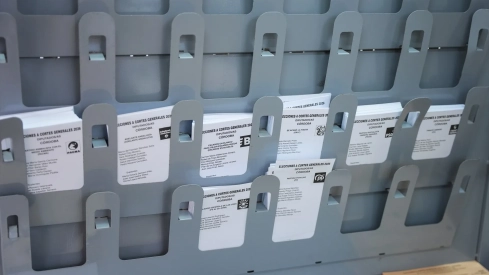
The polls close this Sunday at 8:00 PM, but 29N does not end with the count. Between the general elections and the formation of a new Government there is a calendar set by the Constitution and electoral law that can last weeks or, if there are no agreements, months. These are the steps and deadlines.
1. General scrutiny and external vote (Friday, December 4)
The count on election night is provisional. The general scrutiny, carried out by the provincial electoral boards, begins on the fifth day after the vote, that is, Friday, December 4. It includes the votes of Spaniards residing abroad (CERA), which in some provinces can shift the last seat.
After resolving possible claims, the boards proclaim the elected deputies and senators.
2. Constitution of the Cortes (in a maximum of 25 days)
The Constitution (article 68.6) requires the Congress and Senate to be convened within 25 days following the elections. The exact date is set by the royal decree of convocation. On that day, deputies and senators take office and the Boards of both chambers are elected, a first vote that usually anticipates the majorities of the legislature.
3. King's round of consultations
After the Congress is constituted, the King opens a round of consultations with the representatives of the groups with parliamentary representation. At the end, and through the presidency of the Congress, he proposes a candidate for the Presidency of the Government (article 99 of the Constitution).
4. Debate and investiture vote
The candidate presents his program before the Congress and submits to the confidence of the Chamber:
- First vote: needs an absolute majority, that is, 176 of the 350 deputies.
- Second vote: 48 hours later, a simple majority is enough, more yeses than noes.
If you want to know what combinations allow for governing, we explain it here: How many seats are needed to govern?
5. What if there is no agreement? Repeat election
If the candidate does not obtain confidence, new proposals can be processed. If two months pass from the first investiture vote without any candidate being elected, the King dissolves the Cortes and new elections are called, as happened in 2016 and in November 2019.
Who governs in the meantime?
From election day, the outgoing Government becomes acting. It continues to manage day-to-day affairs, but with limited powers: it cannot, for example, present the General State Budgets or bills, and its actions are limited to the ordinary dispatch of public matters.
📌 29N Election Guide
🗳️ To vote today
- Until what time can you vote today?
- Can you vote with an expired ID?
- How to vote for the Senate: the sepia ballot
- Blank vote, null vote, and abstention
- Polling station: what happens if you don't go
📊 Election night
- What time are the results known?
- Exit polls: what time do they come out
- Where to see the results by municipality
- Participation: times and evolution
- Candidates and parties of 29N
🏛️ After 29N
Contact
We are listening. Get in touch.
