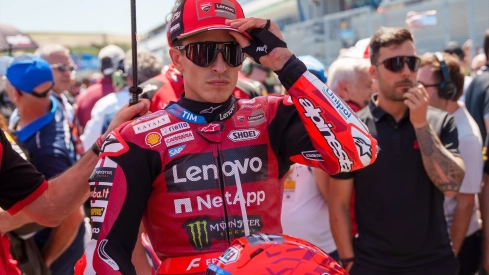
The retirement of Marc Márquez from professional motorcycling has once again put the spotlight on a health problem that had already conditioned his sporting career: diplopia. The Spanish rider acknowledged this Friday that he has suffered several episodes of double vision again during the season, a circumstance that, along with his physical problems, has influenced his decision to leave MotoGP.
During the press conference held at the Ricardo Tormo circuit in Cheste, the eight-time world champion in the premier class explained that he experienced two episodes of diplopia in recent months. The first occurred after the Le Mans Grand Prix and lasted about twelve hours, while the second came after the Indonesian race and lasted about 48 hours.
"I am scared and I have started to feel fear. It is not fear of motorcycles, it is not fear of speed," acknowledged the rider, who explained that the possibility of suffering another injury and the consequences of these visual problems have led him to reconsider his continuity.
What is diplopia and why does it cause double vision?
Diplopia, popularly known as double vision, is a visual alteration that consists of perceiving two images of the same object. Instead of observing a single image, the person sees a duplication that can appear horizontally, vertically, or diagonally. It is not considered a disease in itself, but a symptom that can be caused by different health problems. Therefore, identifying its origin is fundamental to determine the appropriate treatment.
There are two main types of diplopia. Monocular diplopia appears when double vision persists even when one eye is closed and is usually related to alterations of the eye itself, such as problems in the lens, astigmatism, or certain retinal diseases.
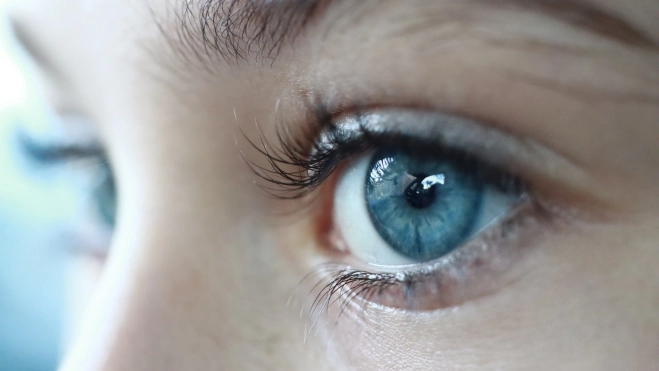
On the other hand, binocular diplopia occurs when the two eyes fail to work in a coordinated manner. In this case, double vision disappears when either eye is covered and can be related to problems in the ocular muscles, the nerves that control their movements, or certain neurological alterations. Among the possible causes are also disorders of the central nervous system, some muscular diseases, and thyroid alterations.
What are its symptoms and when should you see a doctor?
The most obvious manifestation of diplopia is the perception of two images of the same object. However, it is not the only symptom that can accompany this disorder. People who suffer from it may also experience headaches, difficulty focusing, drooping eyelids, or the need to close one eye to try to regain clearer vision. In some cases, the alteration can make daily activities such as reading, walking, or driving difficult.
The duration of the episodes can also vary. Double vision can appear sporadically and disappear after a while, but also persist for longer periods. In any case, it is important to see a specialist to determine what is causing the problem. The sudden onset of double vision requires urgent medical evaluation, especially if accompanied by severe headache, weakness, difficulty speaking, dizziness, or balance disturbances, as it may be a sign of a neurological problem that needs immediate attention.

In Marc Márquez's case, diplopia is not a new complication. The rider already suffered from this problem in 2011 and experienced it again in 2021, after a fall during the Indonesian Grand Prix. Those episodes forced him to temporarily withdraw from competition and undergo a recovery process.
Now, five years later, the reappearance of double vision has once again become a concern for the athlete. Although Márquez has assured that he still feels competitive, he has acknowledged that the risk of suffering new injuries and the consequences they could have for his health have weighed on his decision to end his career in MotoGP.
Contact
We are listening. Get in touch.
