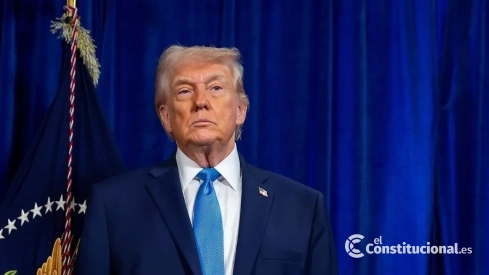
The American president, Donald Trump, has announced the deployment of the Navy to block the strategic Strait of Hormuz, one of the main routes for world trade in oil, after failing to reach an agreement with Iran on its nuclear program. The measure includes the interception of vessels that, according to Washington, have paid tolls to Tehran, as well as operations to eliminate alleged mines in the area. From the White House, the decision is justified as a response to what they consider an “international extortion”, while tension grows in a key region for global energy stability.
The Strait of Hormuz, located between Iran and Oman, is a strategic enclave through which approximately one-fifth of the world's oil transits. Therefore, any restriction on its navigation has an immediate impact on the energy markets and on international security.
From Iran it had been argued that navigation could not be fully guaranteed due to the presence of mines in the area, which made it difficult to fully open the passage to international vessels. However, the U.S. Administration rejects this explanation and considers that it is a maneuver to control maritime transit for its benefit.
The naval deployment announced by Washington includes not only the blockade of the strait, but also the interception of vessels in international waters that, according to the United States, have paid fees to Iran. Furthermore, possible military actions against any threat have been warned of, in a strategy that seeks to force Tehran to resume negotiations on more favorable terms.
