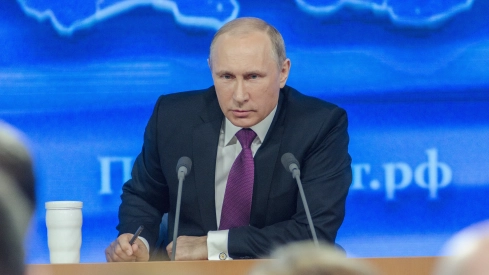
Russia and Spain have opened this Tuesday a diplomatic clash over the disinformation campaign spread around the Ceuta crisis. Moscow has demanded proof from the President of the Government, Pedro Sánchez, after he pointed to networks related to Russia, Israel, and the international far-right for amplifying hoaxes about the massive entry of migrants.
The spokeswoman for the Russian Ministry of Foreign Affairs, María Zajárova, has demanded from Madrid data, dates, and names that allow verifying the accusations. The Government responded a few hours later and assured that its statements are backed by internal reports from the Ministry of Foreign Affairs and by the monitoring carried out from Brussels.
The controversy revolves around an important precision. Sánchez spoke of networks that spread and amplified disinformation about Ceuta, while Moscow has presented his words as an accusation of having directly participated in the massive entry. The European Commission placed the activity of Russian channels starting on July 30, when thousands of people were already heading towards the border.
The chronology more clearly supports the subsequent exploitation of the crisis than the preparation of the initial avalanche. Even so, Moncloa considers that campaign sought to fuel polarization, present Spain as an overwhelmed country, and extend distrust towards European institutions.
Russia asks Spain for proof
"When there are accusations there must be concrete facts that then require verification," Zajárova stated. The Russian spokeswoman added that, without materials backed by "figures, dates, and names," Moscow considers that it lacks elements to respond seriously.
Zajárova also reproached Spain for going to the media before using the available diplomatic channels. "Madrid did none of this and immediately ran to the microphones", she declared after citing the Russian Embassy in Madrid and United Nations bodies as possible communication channels.
Kremlin spokesman, Dmitri Peskov, already rejected this Monday any link of Russia with what happened in Ceuta. His response was then much more concise. "Nothing to do," he affirmed when asked about possible Russian involvement.
Moscow's diplomacy, however, used the crisis from its early days to lash out at Spain, the European Union, and support for Ukraine. Russian Deputy Foreign Minister, Alexandr Grushkó, presented the massive entry as a "collapse" of European migration policy and argued that Spain should have allocated the money committed to Kyiv to its own security.
Ceuta was thus incorporated from late July into the Russian foreign discourse about a weak, divided Europe preoccupied with external conflicts. This narrative appeared while Spain maintained a firm position against the invasion ordered by Vladimir Putin in Ukraine and continued to support the country through military, economic, and diplomatic resources.
Moncloa relies on Brussels
The Minister of Inclusion, Social Security and Migration and Government spokesperson, Elma Saiz, has defended after the Council of Ministers that the Executive "always works with evidence". This evidence would point to digital forums in Russia, Israel, and the so-called ultra-international that amplified what happened to "fracture" Europe and polarize Spanish society.
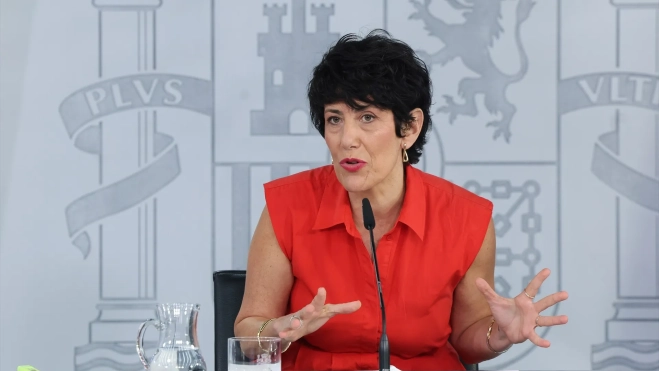
Saiz referred to internal Foreign Affairs reports whose full content has not yet been made public. She also recalled that the European Commission detected Russian channels amplifying the crisis through different platforms since July 30. Brussels explained that it had not observed this activity during the previous days and began to study it as possible manipulation and foreign information interference.
The independent analyses known so far point in the same temporal direction. Technologist Marcelino Madrigal, specialized in disinformation campaigns, has located more than 2,400 headlines published by 38 official Russian media outlets since July 30. Most of them presented Spain as a weakened country against the supposed rise of Morocco.
Another investigation published by 'The Guardian' detected accounts linked to Russia spreading far-right narratives after the massive entry. Among them appeared channels such as Rybar, related to Russian intelligence, and the Pravda propaganda network. Their messages reached more than half a million users in a few days.
The same analysis concluded that a good part of the previous conversations between people interested in crossing the border came from small anonymous accounts and seemed spontaneous. The available evidence more strongly supports the existence of a large operation to politically exploit the crisis once it began.
Israel has also rejected Sánchez's accusations. Its Foreign Minister, Gideon Saar, has called them "blatant lies", although Moncloa's main external support is currently in the European investigation into Russian channels.
The Government is already working with Brussels to identify and close the accounts that participated in the coordinated dissemination of hoaxes and messages aimed at polarizing around Ceuta.
