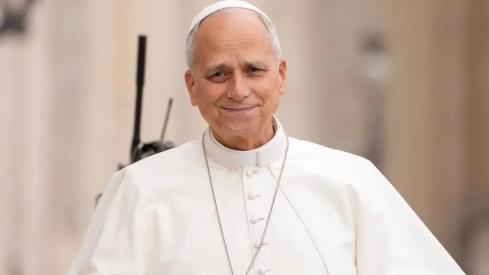
Pope Leo XIV has launched a forceful message about the limits of artificial intelligence and the responsibility of human beings in the face of the advance of this technology. The pontiff has defended that its future is not written and that it depends on the decisions adopted regarding its development and application. "We have the responsibility to guide, modify, and, when necessary, reject its applications," he warned. In this sense, he made clear his position on the technological model that should prevail: "A reliable system at the service of human beings is more valuable than an extraordinarily powerful system whose consequences cannot be adequately foreseen or controlled."
One of the aspects he has focused on is the debate about the possibility of granting rights or legal personality to artificial intelligence systems. Leo XIV has rejected this approach, considering that it can blur who should be held responsible for the damages caused by these technologies. "Machines are instruments, not people," he declared. Furthermore, he warned that recognizing them legal personality could leave those who suffer their consequences facing "a faceless entity," while human responsibility is diluted. For the Pope, decisions affecting life, freedom, and the use of force must always be subject to "effective, informed, and responsible" human control.
His warning also extends to the military sphere. Leo XIV has called for artificial intelligence to be "disarmed" and has expressly asked the States that will meet in Geneva in November to take concrete steps to prohibit lethal autonomous weapons. The pontiff believes that intelligent technologies should be oriented towards the common good and not become tools at the exclusive service of a privileged few. On the contrary, he has defended that their benefits should be distributed equitably and contribute to the solidarity and participation of different communities, especially the most needy.
Finally, the Pope has called for the creation of effective international institutions that guarantee real oversight of artificial intelligence. Although he believes that sufficient ethical principles already exist to guide its development, he has insisted that they must now be translated into shared norms, independent oversight mechanisms, and clearly defined responsibilities. He has also argued that decisions regarding the development and use of these systems can be examined and questioned, with corrective measures when they cause harm. His message is clear: technological progress cannot advance outside of human responsibility or the common good.
El futuro de la #InteligenciaArtificial no está predeterminado. Al tratarse de una tecnología desarrollada por seres humanos, su futuro depende de las decisiones que tomemos. Por lo tanto, tenemos la responsabilidad de orientar, modificar y, cuando sea necesario, rechazar sus…
— Papa León XIV (@Pontifex_es) October 30, 2026