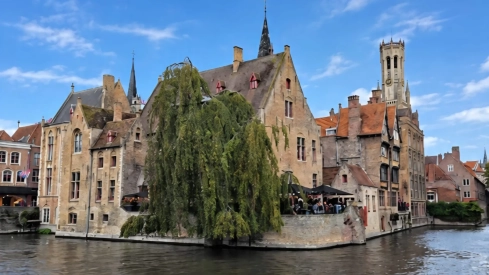
Bruges concentrates visitors in the so-called "golden triangle", but the Flemish city is much more than a mere postcard.
Although it enchants, the city's name is not linked to witches, sorceresses, bruxas, enchantresses, encorujás or trementinaires but, in a certain way, it is linked to Spain since it is a sound adaptation of brugges, a word that in Flemish means "bridges", "docks". A derivation originated by the important Spanish presence, under whose dominion the country and the city where the first global stock exchange was born were.
Bolsa, the name given to commercial exchange centers, comes from another derivation: that of the surname Van der Bourse, the family that owned the inn Ter Beurse where merchants met to do business in a city where a quarter of the population was dedicated to trade. Favored by its link to the sea and provided with adequate infrastructure, it was the perfect setting.
The first Spanish traces in this city, whose historic center, visited last year by 9 million tourists – five hundred times more than residents –, date back to the 13th century with the presence of a small colony of Basque merchants who, attracted by the merino wool trade, were followed by merchants from many other areas. Its imprint is still visible in the so-called house of the Spaniards, on the most photographed canal, a 15th-century late-Gothic mansion commissioned by the family of Juan Pérez de Malvenda who, in turbulent times, hid the relic of the Holy Blood there, of whose Brotherhood he was a member.
The family of Luis Vives arrived in Bruges fleeing the persecution against Jews in Spain. For this reason, the Valencian humanist, who was buried in the cathedral of San Donaciano, developed most of his work here. In that cathedral, destroyed by French troops at the end of the 18th century, rested the remains of Van Eyk, a key figure in the cultural heyday of Flanders, which is why they are not preserved and only a statue on the Bridge of San Bonifacio reminds us of Vives. The plot where that cathedral stood, whose foundations are under the Crowne Plaza hotel, corresponds to what is currently the Burg Square.
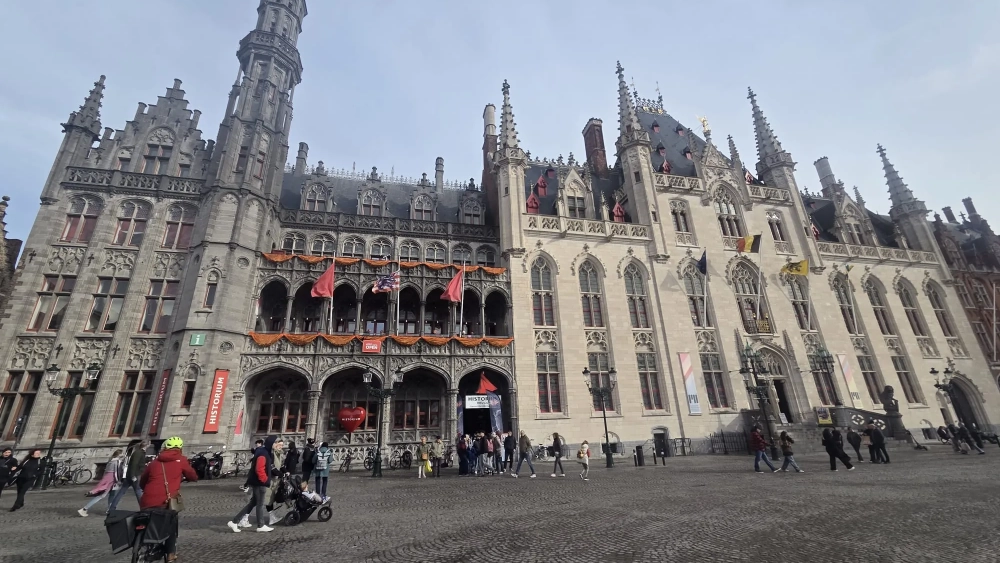
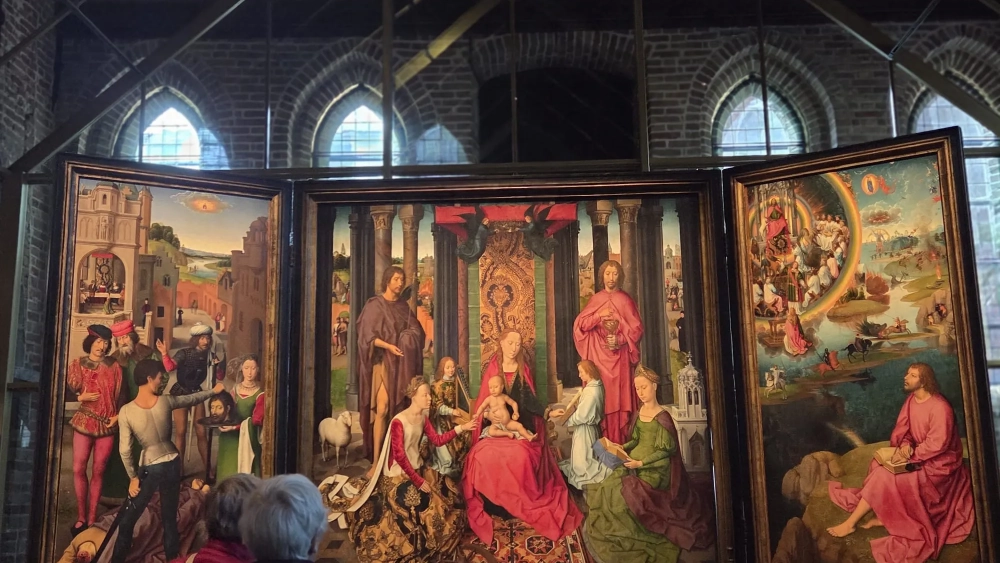
On the Gothic-style facade of the town hall, the figures of Philip the Handsome, Charles V, his aunt Margaret of Austria, and Philip II, admirers of Flemish painting, emerge. In Bruges, it is possible to find works that the so-called Flemish masters specifically conceived for the place where they are currently preserved. These are primarily churches, palaces, and historic buildings. One of these buildings is the Franconate Palace, in the same Burg Square. To fully enjoy the Flemish experience, a visit to the St. John's Hospital Museum is advisable, one of Europe's oldest and best-preserved hospital buildings, for which Memling created 7 works, including 3 triptychs and a combination of painting and sculpture, his masterpieces.
In the church of Our Lady, one must notice the detail with which Michelangelo carved the Madonna, the artist's only work that left Italy and, despite successive plundering and looting, returned to be venerated by the people of Bruges. Outside the so-called golden triangle but within the "Flemish in situ route" designed by Visit Flanders, is the Adornes Estate with its impressive Jerusalem chapel.
The city, a World Heritage Site, is known by various nicknames that link it to the water in which its image is reflected: city of towers, of canals, of bridges, or the Venice of the North. However, Saint Salvator's, the current cathedral which obtained this rank after Belgium's independence in 1834 to replace the destroyed Saint Donatian's, unlike the Belfry, which does, prefers not to reflect itself and to be a protagonist on the horizon.
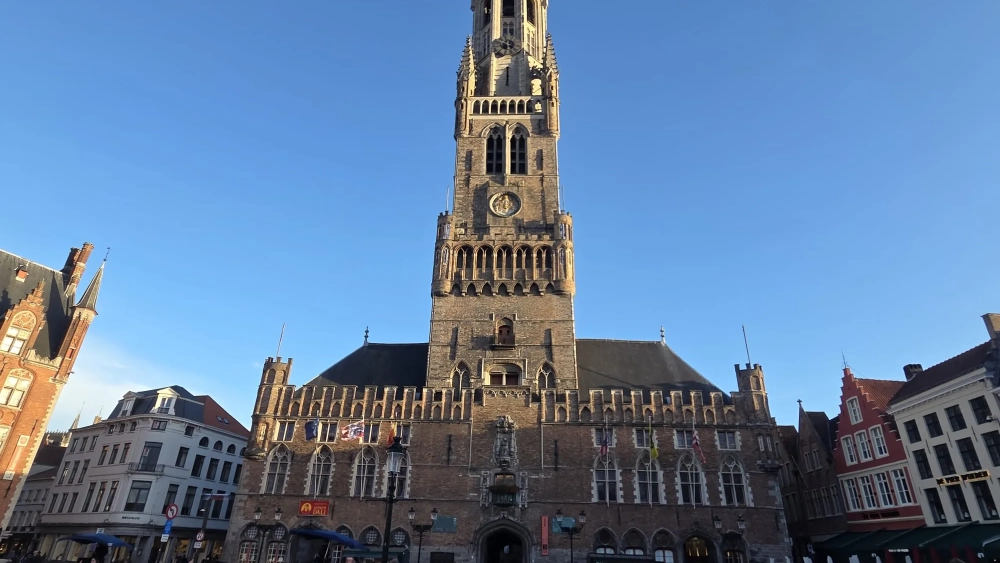
Bruges is one of those wonderful cities that, fortunately, has changed little over time. Despite this, and although four gates are preserved, the walls that once protected it are not maintained. The fortification has given way to an extensive green belt.
Contact