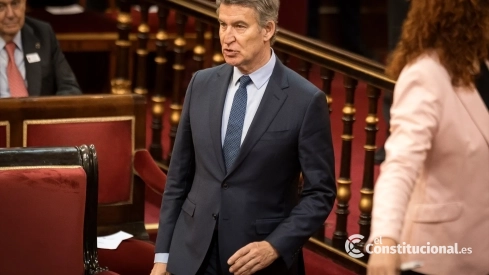
The Popular Party has presented a package of ten urgent measures with which it intends, as it points out, to alleviate the situation of the middle classes, whose purchasing power —it denounces— has been deteriorated by the economic policies of the PSOE Government.
The party that leads Alberto Núñez Feijóo maintains that salaries remain stagnant since 2017, while productivity falls, prices have soared and the shopping basket —especially basic products— does not stop getting more expensive. To this, it adds, is added a growing tax pressure that has reduced the economic capacity of many families, in particular those with children.
Among the proposals put forward is a comprehensive audit of public spending and the updating of the IRPF in line with inflation, with the return to middle classes of part of what was collected for not having adapted the tax to the rise in prices. The PP also proposes an urgent housing plan, the approval of an “anti-squatting” Law and an administrative simplification program based on digitalization, automation and artificial intelligence to reduce deadlines and costs.
The battery of initiatives also includes measures such as positive administrative silence and a boost to taxation that incentivizes saving. The populars criticize that, despite the fact that the current context of inflation and high taxes has led to record collection, that increase in income has not translated —they affirm— into better public services, infrastructure, or well-being for families.
The document that supports these proposals, titled ‘Analysis of the decline of the middle classes’ and prepared by the Undersecretariat of Economy and Sustainable Development, led by Alberto Nadal, argues that the economic growth of recent years has not had a direct reflection in the improvement of the standard of living. “Almost eight years later, Spaniards —and especially the middle classes— live worse than when Sánchez arrived at Moncloa”, assures Nadal.
The report points out that real wages have remained stagnant or have retroceded between 2017 and 2023, and that they are increasingly concentrated around the Interprofessional Minimum Wage, while tax pressure increases. This situation, it points out, particularly affects young people, who also face housing prices that they consider unaffordable.
According to the data collected, 80% of full-time workers have incomes below 30,000 euros annually, which, in the opinion of the PP, questions the discourse of economic prosperity. It also maintains that the median salary has lost at least 4% of purchasing power between inflation and taxes, and that GDP per employed person has decreased by 0.9% since 2019.
Regarding household spending, the party indicates that only in 2024 previous levels have been recovered, although it attributes it to the increase in cost of items such as housing and healthcare rather than to an improvement in well-being. Furthermore, it assures that real spending on food, clothing, and hospitality remains below that recorded in 2018 and that the consumption of products such as beef, fish, or olive oil has fallen, forcing many families to adjust their budget on basic goods.
Finally, the PP stresses that the price of food has increased by 38% since 2018, which, in its opinion, especially impacts the lowest incomes, which allocate a greater proportion of their income to the purchase of basic products.
