Adif continues without setting a date for the reopening of the Madrid-Andalusia high-speed corridor and the Ministry of Transport takes for granted that the line will not be ready before the December long weekend, although it is considering a repair scenario of about two weeks if no additional incidents appear.
The infrastructure administrator's technicians accessed kilometer 118 of the Madrid-Seville line this Friday to check the damage caused by the Urda accident, in Toledo, where a Renfe AVE and an Iryo AVE collided and 69 people died. The department insists that, for now, "it is impossible to commit to dates", because the on-site inspection and the exact assessment of the damages must first be completed.
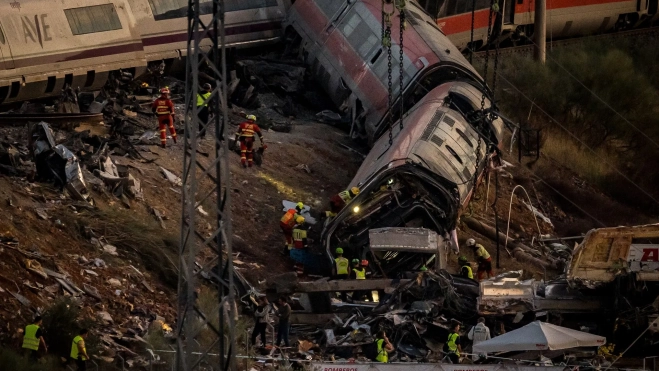
The Ministry itself had worked with an initial period of 10 days for the restoration of the service starting from the moment the judge gave the green light to the remodeling, as Óscar Puente pointed out on November 3, before resigning from his position.
The judicial inspection starts the countdown, but does not set the reopening
The judge investigating the case in the Court of First Instance of Orgaz authorized the start of the reforms this Thursday, but did so with conditions. The magistrate requires Adif a prior review, a complete inventory of the affected elements and, subsequently, a list of everything that has been modified, repaired or replaced.
Until now, the area had remained sealed while the damaged trains were removed and evidence was collected. The court wants to keep the exact point of the intervention under control and record the material used, within a case that remains under summary secrecy.
A spokesperson for the Ministry of Transport maintains that "the first on-site work" is needed to refine any calculation, while an internal source places the most optimistic horizon at two weeks, provided that the review does not detect new complications. The urgent procedure will allow accelerating the contracting of engineering and construction.
Operators look to December 13 while the system remains limited
Renfe, Iryo, and Ouigo are keeping ticket sales closed for the coming days and have not enabled reservations until Sunday, December 13. All three coincide on that date, which also corresponds to the scheduled service timetable change for 2027, due to the lack of a definitive confirmation from Adif. The Government has ordered an in-depth review of the line, remodeled between 2022 and this 2026 with an investment of 780 million, which leaves any fixed return schedule up in the air. Transportes has stated that the recovery of the service will be carried out with the highest safety guarantees, but without an immediate restoration of normality.
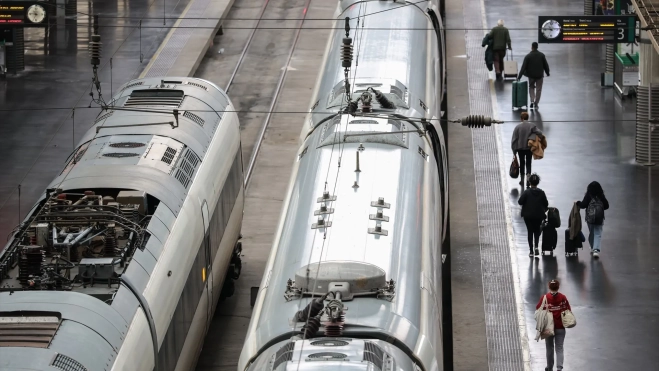
In parallel, the ministry has imposed a reduction in circulations to maintain a greater safety distance between trains while the new ERTMS level 2 signaling system comes into operation, which will replace the older LZB. The failure of the latter was at the origin of the Urda accident, along with a subsequent chain of erroneous orders issued from Adif's traffic control center to the drivers of seven trains stopped on a 69-kilometer stretch. The entry into service of ERTMS is scheduled for the first months of 2027, although the deployment concluded in July and the system is still undergoing tests during weekend night maintenance windows. Until then, operators have been asked to use double-composition trains to cut capacity as little as possible, and the order for "on-sight driving" is maintained when the LZB is turned off.
The sequence of measures comes after another tragedy on the same line, that of Adamuz, in Córdoba, on January 18, with 46 fatalities. The succession of accidents has already cost the positions of the Minister of Transport and the presidents of Adif and Renfe, and this Friday the strike announced by the train drivers' union Semaf for Monday 23 has also been called off, after an agreement with the department that incorporates new protocols for action in adverse weather conditions.
Contact
We are listening. Get in touch.
