
The Danish chain Flying Tiger has announced the withdrawal from the market of several models of glasses after detecting concentrations of lead and cadmium higher than those permitted by European regulations. The company has communicated the measure through its website and social media, warning of a possible risk to consumers.
The affected products are six types of 220-milliliter glass cups with different decorative designs, including flower, pumpkin, orange, red heart, strawberry, and lemon motifs. Some of these items were available since 2024, while the most recent model went on sale in January 2025, so the company estimates that thousands of customers could have purchased them.
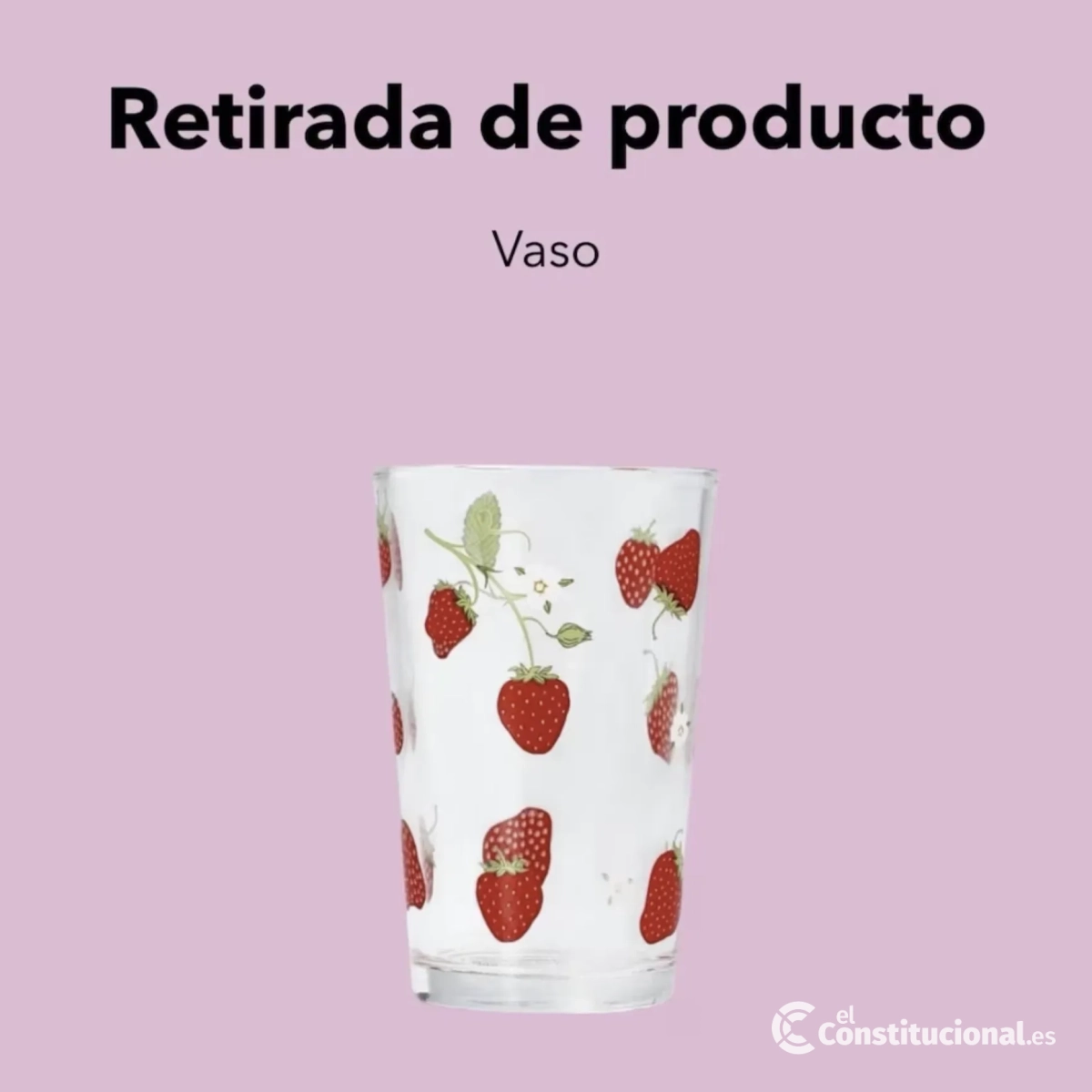
As the company has explained, the problem is found in the exterior decorative layer. The analyses carried out detected that the release of lead and cadmium exceeds the limits established by the legislation of the European Union for materials that can come into contact with food.
Given this situation, the company has asked those who have any of these cups to stop using them immediately. In addition, they can return them at any store of the chain and receive a full refund of their price, two euros, even without presenting the purchase receipt.
In the English version of the notice, the company clarifies that the risk is limited to the decorative layer of the exterior and that the glass itself does not present problems. It also points out that there is no immediate danger to health, although the product fails to comply with European legal requirements.
The recall occurred after an internal investigation. Initially, the problem was detected in a single model, but subsequent controls identified five other glasses with the same incidence. The company assures that its articles are habitually subjected to quality tests and analysis in external laboratories before their commercialization, although in this case the fault was discovered after their sale.
The decision is framed within the community regulations that regulate the presence of contaminants in food contact materials, in particular Regulation (EU) 2023/915, which establishes maximum limits for metals such as lead and cadmium with the aim of protecting public health.
Various studies, such as those cited by the American Heart Association, warn that prolonged exposure to these metals can have health consequences. Among the associated risks are cardiovascular diseases, strokes, and other problems derived from the accumulation of these substances in the body over time.
Add ElConstitucional.es as a preferred Google source for free.
Stay informed about all the latest breaking news with the best information. Against disinformation, for democracy and social rights.
