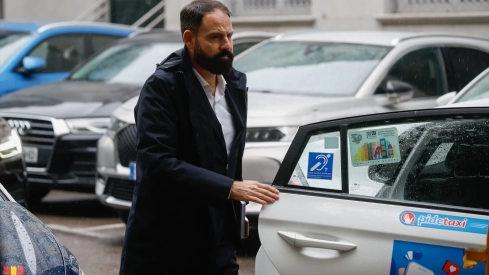
The former manager of the PSOE, Mariano Moreno, assured this Wednesday before the Supreme Court that the party “never” used 500, 200 or 100 euro banknotes to reimburse expenses to former minister José Luis Ábalos nor to his former advisor Koldo García. His testimony is part of the trial for the alleged irregularities in the contracting of sanitary material during the pandemic.
During his statement, Moreno was forceful in explaining the operation of the party's treasury. “We never asked for 500 euro bills, nor 200 euro bills, nor 100 euro bills,” he affirmed, emphasizing that cash was always requested through the banking entity linked to the PSOE's operating account, which sent the cash through private security companies.
The former manager also defended that there was a rigorous control of expenses, regardless of the payment method. According to what he detailed, “99.4%” of the disbursements were made by bank transfer, while the use of cash was minimal. In all cases, he insisted, the settlements were accompanied by supporting documents and receipts that accredited the expenses incurred.
In relation to former minister Ábalos, Moreno explained that the settlements followed the same procedure as for the rest of the party's positions. In this regard, he indicated that Ábalos himself authorized his expenses and those of his team in the Secretariat of Organization, “the same” as other organic leaders within the PSOE did.
The witness also pointed out that all this documentation has been sent to the judicial investigation led by judge Ismael Moreno in the Audiencia Nacional, within the framework of a part of the well-known Koldo case, which analyzes the cash payments made by the party between 2017 and 2024 to reimburse anticipated expenses.
Asked about possible striking expenses, Moreno mentioned a meal of more than 700 euros as the highest amount he remembered. According to what he explained, it was a meeting with about fourteen diners during the Galician electoral pre-campaign of 2020, an expense that, in his opinion, was “reasonable” in that context.
Add ElConstitucional.es as a preferred Google source for free.
Stay informed about all the latest breaking news with the best information. Against disinformation, for democracy and social rights.
