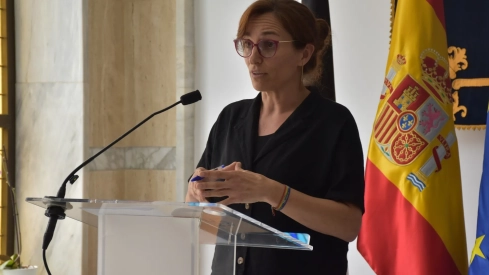
The president of the PP, Alberto Núñez Feijóo, has demanded that the Government study the confinement of people carrying infectious-contagious diseases given the health situation generated in Ceuta after the massive arrival of migrants. In an interview with Europa Press, Feijóo maintained that the Executive should evaluate this measure “for public health reasons.” The Minister of Health, Mónica García, responded to these statements with a message on X in which she questions both the diagnosis made by the popular leader and the advisability of adopting a generalized confinement.
Ante la situación sanitaria de Ceuta el Gobierno debería estudiar decretar un confinamiento de los portadores de enfermedades infectocontagiosas por razones de salud pública. pic.twitter.com/YaVYbAmxES
— Alberto Núñez Feijóo (@NunezFeijoo) August 23, 2026
García has recalled that public health competencies in Ceuta correspond to the Government of the autonomous city and has pointed out that, if Feijóo considers that there is a health emergency, he should first inquire about the actions being carried out by the Ceuta administration. The minister has also defended that the available data do not support such a measure and has reviewed the diseases mentioned by the president of the PP.
Regarding tuberculosis, the Ministry of Health has recorded three confirmed cases. One of them was already undergoing treatment and was not contagious, another corresponded to cerebral tuberculosis, and the third was a person who had been in Ceuta for some time and was already immersed in a diagnostic process. García has explained that the detection studies carried out by the services of the autonomous city have generated some suspicions, but none of them have ended up being confirmed. In addition, she has contextualized the figures by pointing out that since 2020, around 90 cases of tuberculosis have been registered in Ceuta compared to about 20,000 in Spain as a whole.
As for chickenpox, the minister has specified that three suspected cases have been detected. One of them, related to Operation Crossing the Strait, was ruled out, while the other two remain pending confirmation and are not related to the migrant population that arrived during the current crisis. García has stressed that the disease is not eradicated in Spain either and that cases occur periodically.
Hoy el señor Núñez Feijóo ha pedido que confinemos a la población migrante de Ceuta por motivos de salud pública. Creo que merece la pena responder señalando algunos aspectos importantes desde la ciencia:
1. Las competencias en materia de salud pública en Ceuta las tiene el…
Regarding scabies, the Ministry of Health has focused on its habitual presence in Spain. The minister cited a study published in 2025 in Eurosurveillance according to which scabies would have a higher incidence than estimated, especially in those territories where more exhaustive detection systems exist. Between 2021 and 2023, 1,529 outbreaks were identified in Spain, totaling 11,301 cases. García stressed that these episodes do not require hospitalization or confinements and called for more support for Ceuta's public health teams to strengthen their surveillance and control efforts.
Regarding gastroenteritis, the head of Health reduced the figure of 450 cases proposed by Feijóo and explained that, after analyzing the case grouping, the Preventive Medicine services of the Ceuta Hospital estimate 55 probable cases of enteroinvasive E. coli. According to García, the outbreak would already be controlled and no new infections would have occurred. The minister especially linked this episode to the consumption of water unfit for human consumption within the autonomous city.
Health prioritizes accommodation, hygiene, and vaccination over confinement
García defended that the most urgent health response involves guaranteeing people arriving in Ceuta adequate conditions of accommodation, sanitation, hygiene, food, and access to drinking water. In her opinion, acting on these conditions would allow reducing most of the factors that favor the appearance of outbreaks.
The minister also stressed that the migrant population and Ceuta residents do not usually share the same spaces and that occasional contacts that may occur in public places do not, by themselves, constitute a public health risk. She also assured that health professionals have specific protocols to attend to patients who may present transmissible diseases.
The analysis carried out by the Center for Coordination of Health Alerts and Emergencies establishes that the risk of disease transmission among the migrant population is moderate, mainly due to overcrowding, street living conditions, and difficulties in accessing adequate hygienic and dietary measures. However, the evaluation places the risk of this episode causing an increase in transmissible or non-transmissible diseases among the resident population in Ceuta at a low level.
With this scenario, García considers that Feijóo's request to confine all people who arrived in Ceuta between the 30th and 31st lacks sanitary basis. The minister has described it as "unjustifiable and totally excessive" if it is proposed as a measure to protect public health and has differentiated between collective confinement and individual isolation that can be established when there is a diagnosis that requires it.
The head of Health has also warned that a confinement measure must be related to the transmission mechanism of the disease it intends to contain and has pointed out that, in this case, it could generate more harm than benefits from a health point of view. She has also recalled that Organic Law 3/1986 requires the existence of "rational indications" for certain public health actions and has questioned whether the available data allow sustaining that these circumstances concur.
The Public Health Commission activates the shipment of vaccines to Ceuta this Monday
In parallel to the political controversy, the Public Health Commission of the Ministry of Health holds an extraordinary meeting this Monday with the autonomous communities to coordinate the shipment of vaccines to Ceuta after the massive arrival of migrants registered since last July 30.
The meeting, which will take place telematically starting at 12:00 p.m., seeks to launch a solidarity mechanism among the autonomies to provide the autonomous city with the doses it needs. Among the requested vaccines are those corresponding to the MMR, chickenpox, polio, tetanus, and diphtheria.
The Director General of Public Health, Pedro Gullón, justifies the urgent call by the need to address "as soon as possible" the supply of vaccines. Sanidad has explained that this action is part of the joint work it maintains with the public health officials of Ceuta and the vaccination protocol for migrant and refugee populations approved in June 2026 by the Public Health Commission.
The minister has announced that the objective is to facilitate the arrival of doses while the Government of Ceuta continues to acquire more vaccines within its competencies. García has insisted that, in contrast to the confinement proposal, the priority must be to guarantee healthy living conditions and reinforce prevention, surveillance, and vaccination measures.
