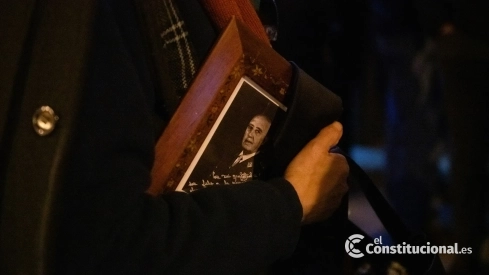
The High Court of Justice of Madrid (TSJM) has refused to grant the ultra-precautionary measures requested by the Francisco Franco National Foundation to immediately halt the administrative process promoted by the Ministry of Culture to request its illegalization. The court considers that there are no sufficient reasons for urgency to adopt a decision without previously hearing the other party.
The foundation had requested this measure within the appeal filed against an administrative resolution of the Ministry of Culture related to the procedure to promote its extinction. With that request, it sought that the court immediately suspend the effects of that resolution while the merits of the dispute are resolved.
In their order, the magistrates conclude that the circumstances of urgency are not met necessary to adopt a very urgent precautionary measure, that is, a judicial decision taken without previously hearing the Administration. For that reason, the court rejects immediately halting the process that seeks to bring the foundation before the courts to decide on its possible dissolution.
The judicial resolution explains that the appealed decision is interlocutory, which means that it is part of the administrative procedure but does not yet constitute the final resolution of the case. Therefore, the court understands that the issues raised can be analyzed within the ordinary course of the judicial process.
Even so, the TSJM has opened a separate proceeding for precautionary measures to study whether or not to suspend the procedure through the ordinary channel, this time listening to both the foundation and the State Attorney's Office. That is to say, although the urgent suspension is rejected, the court will subsequently analyze whether it is appropriate to adopt any type of precautionary measure.
The process against the foundation is part of the Government's initiative to extinguish entities that, according to the Executive, engage in apology for Francoism or disparage the victims of the dictatorship, something that the Democratic Memory Law considers incompatible with the general interest required of foundations.
Add ElConstitucional.es as a preferred Google source for free.
Stay informed about all the latest breaking news with the best information. Against disinformation, for democracy and social rights.
