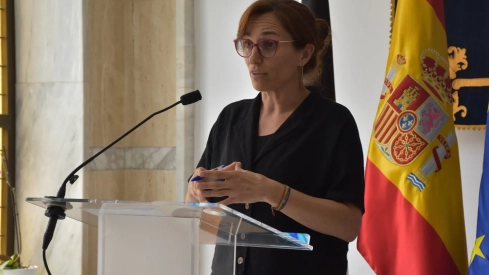
The Minister of Health, Mónica García, has again denied that there is a health collapse in Ceuta despite the care pressure derived from the migration crisis that the city is experiencing. During her intervention this Monday on the TVE program ‘La hora de la 1’, García defended the Government's actions and insisted that the priority now is to guarantee adequate health and habitability conditions for the people who have arrived in the city.
Asked about the health situation, García insisted that the immediate priority must be to act on the conditions in which the people who have arrived in Ceuta find themselves: “In the case of health, which was on the ground yesterday, the most urgent thing is to provide health and habitability conditions for these people.”
Mónica García, sobre la situación sanitaria en Ceuta: "En el caso de la sanidad, que estuvo ayer en el terreno, lo más urgente es dar condiciones de salubridad y habitabilidad a esta gente" https://t.co/gQqRzK0bem #LaHora17A pic.twitter.com/wHIS3vfQnq
— La Hora de La 1 (@LaHoraTVE) August 17, 2026
The statements come after the minister herself traveled to Ceuta this Sunday and assured that “there is no collapse.” García then stated that “Ceuta and Melilla have been made a priority for the Ministry of Health,” although she acknowledged that the high number of people concentrated in the city poses a health risk, especially due to overcrowding conditions. Given this situation, she proposed to the autonomous city the habilitation and cession of spaces where health actions and early diagnoses could be carried out.
The Ministry of Health maintains its position with the data on healthcare activity recorded during the last two weeks. According to its figures, in that period, 5,800 migrants were attended to in Ceuta: 3,500 in primary care and another 2,300 in the hospital. Health admits that professionals have had to face increased strain on the system, but points out that the volume of care has decreased from the 1,100 recorded on the first day to 193 this Saturday.
Currently, the city's only hospital attends to 101 admitted patients, 28 of whom are migrants, while one remains in the ICU. These data are what the Government uses to defend that Ceuta's healthcare system is “strained,” but not collapsed.
The dimension of the crisis explains part of this pressure. Between July 30 and 31, some 80,000 people entered Ceuta, according to figures handled by the Government, in a territory that has only one hospital. The sudden increase in population has forced a reinforcement of healthcare and has raised the assistance needs in the city.
In this context, García has also referred to the people of Ceuta who claim to feel “abandoned by the Government.” The minister has pointed out that “subjective feelings are all reasonable. The Government has been there from minute one,” thus asserting the Executive's response to the crisis.
