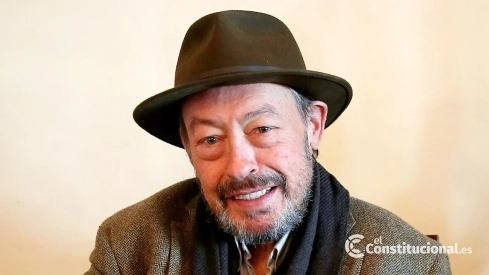
Gregorio Morán was born in Oviedo in 1947, although he spent a large part of his life in Barcelona. A city from which he studied and investigated the Spanish Transition. Coincidentally, he passed away on the 45th anniversary of 23-F, after Pedro Sánchez's announcement to declassify the archives of the attempted coup d'état in 1981. Morán has been one of the great critics of this historical period and always tried to demystify it in a sharp and subtle way.
In works like El precio de la Transición or El cura y los mandarines, the Asturian journalist analyzed the network of complicities between political, economic, and cultural power that was woven in the seventies and eighties. His thesis was clear: democratic stability had a price, and part of that price was the consolidation of new elites unwilling to submit to deep criticism. With names and surnames, Morán questioned the role of intellectuals and leaders who, in his opinion, contributed to establishing a complacent narrative of the period.
He also wrote the biography of Adolfo Suárez, Adolfo Suárez: history of an ambition (1978), a reference book for understanding this period. Morán went through different newspapers, such as Opinión, Arreu, Diario 16 or La Gaceta del Norte, of which he was director. Although he will always be remembered for the 30 years he spent writing his Untimely Saturdays in La Vanguardia. From 1988 until 2017, the year in which he was fired for denouncing the censorship of an article, reflecting his marked character as a journalist of race. He ended his career as a columnist in Voz Pópuli. He practiced opinion journalism that combined historical memory, political analysis, and a notable literary load.
Morán was, above all, a critical and independent journalist. For him, the Transition was not an untouchable myth, but a complex process, full of lights and shadows, that had to be subjected to constant revision. That critical attitude, sustained for decades, made him a controversial but influential figure. Now that his voice has been silenced, his legacy remains in his books and his sharp columns.
Add ElConstitucional.es as a preferred Google source for free.
Stay informed about all the latest breaking news with the best information. Against disinformation, for democracy and social rights.
