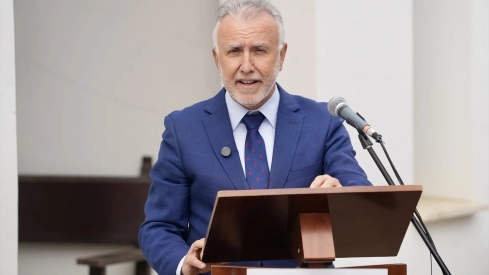
The Government of Spain, through the Ministry of Territorial Policy and Democratic Memory, pays tribute to the 307 Spaniards disappeared or murdered during the Argentine dictatorship (1976-1983) in an event held this Thursday at the headquarters of the Instituto Cervantes in Madrid. The initiative has the collaboration of this institution and is part of the democratic memory policies promoted by the Executive.
The recognition has its origin in the institutional declaration approved by the Government last March 24, coinciding with the Día Nacional de la Memoria por la Verdad y la Justicia en Argentina. This gesture puts the focus on the Spanish victims of a regime that used systematic repression, forced disappearances and torture as instruments of political control.
Many of those honored were emigrants or descendants of exiles from Francoism, which adds a particularly symbolic dimension to the act. After fleeing the Spanish dictatorship, these people again suffered persecution under another authoritarian regime, which underlines the transnational character of repression in the 20th century.
The event features the participation of prominent institutional figures such as the former President of the Government José Luis Rodríguez Zapatero, the minister Ángel Víctor Torres and the director of the Instituto Cervantes, Luis García Montero. The ceremony will be hosted by the journalist Xabier Fortes.
In the cultural sphere, the tribute will feature the presence of artists such as Ana Belén, Juan Diego Botto and Miguel Ríos, as well as the singer-songwriter Pedro Pastor. In addition, a debate will be held with the former Attorney General of the State Dolores Delgado and the forensic anthropologist Luis Fondebrider.
The event, with free access until full capacity and with online broadcast, seeks not only to preserve the memory of the victims, but also to accompany their families and reinforce the commitment to the principles of truth, justice, and reparation. Likewise, it places the emphasis on international cooperation and on the fight against impunity, at a time when the recovery of historical memory continues to be a current demand.
Add ElConstitucional.es as a preferred Google source for free.
Stay informed about all the latest breaking news with the best information. Against disinformation, for democracy and social rights.
