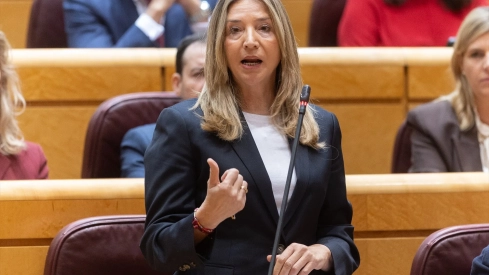
The spokesperson for the Popular Party in the Senate, Alicia García, has accused Pedro Sánchez's Government of being "the most harmful to women and the most sexist in democracy". The popular leader made these statements this Wednesday in Salamanca, during an electoral event with women organized on the occasion of the International Day for the Elimination of Violence against Women, which is celebrated every November 25.
García has assured that it will be women who will put an end to the current Government at the polls and has defended that "on Sunday, confidence in the necessary change proposed by Feijóo and the vote of women will put an end to 'sanchismo'." The senator participated in a meeting with the mayor of Salamanca and provincial president of the PP, Carlos García Carbayo, and popular candidates for Congress and the Senate.
During her appearance, she focused a good part of her criticism on the Executive's management of equality and gender violence. Specifically, she pointed out the "only yes is yes" law, incidents related to telematic protection bracelets, and internal complaints against former socialist officials.
Alicia García's criticisms of the Government's management of gender violence
The popular spokesperson has held the Executive responsible for the sentence reductions and releases resulting from the application of the "only yes is yes" law. She has also questioned the Government's response to the problems detected in the Cometa system, responsible for managing the telematic devices for controlling restraining orders.
García has stated that around 5,000 women victims of gender violence have felt fear due to the failures of these devices and has accused the Minister of Equality of knowing about the incidents and concealing them. In addition, she has demanded that Sánchez apologize to the victims whose aggressors benefited from sentence reductions. "For a bracelet to fail is to add fear to fear, pain to pain," she stated. In this regard, she recalled Alberto Núñez Feijóo's commitment to victims and summarized his proposal with the following slogan: "Not one woman unprotected, not one victim abandoned, and aggressors, to jail."
The leader has also criticized the PSOE's response to the complaints against former socialist leader Francisco Salazar and has questioned the actions of several government ministers. According to García, the Executive's officials looked the other way when faced with the complaints of their own colleagues.
The PP's proposals and the call for the female vote
During her speech, Alicia García advanced some of the measures that, she defended, a future Feijóo government would implement. Among them, she mentioned an audit of spending allocated to these policies, more resources for the National Police and the Civil Guard, the reinforcement of the VioGén system, and a greater police presence.
She also proposed transferring the management of telematic bracelets to the Ministry of Interior, reinforcing police coordination, preventing the collapse of courts specializing in violence against women, and applying permanent revisable prison sentences to repeat offenders in sexual crimes. Likewise, she advocated for the expulsion of foreigners who commit crimes against sexual freedom. At the event, the PP spokesperson referred to the more than 600 women who, according to the data she cited, live in Salamanca with police protection. More than half of them, she noted, have children in their care. García also addressed women who suffer or have suffered gender violence and assured them that "they are not alone."
Finally, she highlighted the role of previous generations in advances in equality and argued that these policies must be present in all areas of public management, including the agricultural sector. "What we women today have achieved, we owe to our mothers and our grandmothers," she concluded.
Contact
We are listening. Get in touch.
