The Popular Party has warned that the housing decrees approved by the Government, which this Friday will be submitted for validation in the Plenary Session of Congress, will promote the so-called “inquiokupación” (squatting by tenants) and provoke a “wave of appeals” in the courts, while also increasing, in their opinion, legal uncertainty in the rental market.
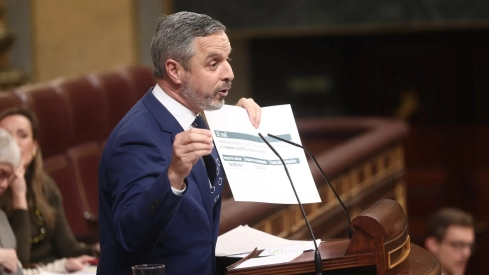
The Deputy Secretary of Finance, Housing and Infrastructure of the PP, Juan Bravo, explained after an informative meeting at the party's national headquarters, together with the spokesperson of the Popular Group in Congress, Ester Muñoz, that “these two decrees will bring confrontation, generate a wave of appeals in the judicial sphere and clashes between landlord and tenant, and, furthermore, will promote inquiokupación.”
According to the PP, the housing shortage is skyrocketing rental and purchase prices in an “alarming” way, while the population increase reduces the number of available flats for more inhabitants and leads, in their opinion, to a “total collapse”. The Popular Party has also pointed out that in 2025 just over 90,000 homes were built in Spain, a figure they consider insufficient compared to the 250,000 that, they maintain, would be necessary to alleviate the real estate market crisis in the medium term.
The PP attacks the “legal mess”
Bravo has confirmed that the Popular Group will vote against both texts, as already announced this Wednesday by the president of the PP, Alberto Núñez Feijóo, and has summarized his party's position with a resounding phrase: “Our vote is 'No' because we want to protect all Spaniards.”
Before Bravo's intervention, Ester Muñoz maintained that the decrees will generate an avalanche of lawsuits because, in her opinion, the texts “say one thing and the opposite.” The popular spokesperson has described the initiative as a “legal and legislative mess” and has insisted that it will cause great legal uncertainty and a notable increase in litigation.
Muñoz explained that, as of 00:00 tonight, there may be extensions of rental contracts until 2028, but also an indefinite extension, as stated in the second decree, which, she said, will end up in the courts. In addition, she acknowledged that at this moment they do not know exactly what will be voted on this Friday in the Plenary Session and pointed out that the PP's legal services are studying possible next steps.
Castilla y León announces an appeal and other communities could follow suit
For now, the Government of Castilla y León has already announced its intention to appeal the housing decrees approved by the central Executive, considering that they "clearly" invade regional competencies, "harm" the interests of the community, and generate "legal uncertainty". Sources from the parliamentary environment do not rule out that other autonomous communities may follow the same path and also go to court.
Juan Bravo has criticized the lack of consultation with the autonomous communities to promote housing measures in a matter in which, he recalled, they also have competencies, as do city councils. During his intervention before the media, Bravo focused on Junts, which has called a meeting of its Executive Committee for 9:00 p.m. to decide its vote, and admitted that he finds it hard to believe that the party of Carles Puigdemont will support the first housing decree.
Sources from the PP have indicated that several of the measures included in that text, aligned with the theses of Sumar and Podemos, are very far from Junts' ideological line and could harm a good part of its electorate. During his intervention before the media, Bravo focused on Junts, which has called a meeting of its Executive Committee for 9:00 p.m. to decide its vote, and admitted that he finds it hard to believe that the party of Carles Puigdemont will support the first housing decree. The popular leader thus concluded his intervention with a frontal criticism of the Government's housing policy: "Sánchez is the problem".
