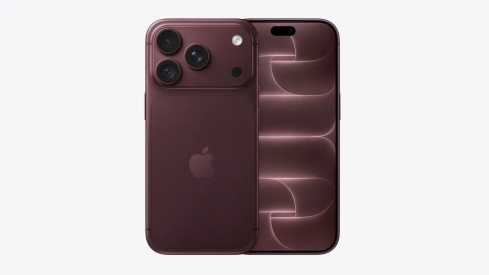
At first glance, it's hard to distinguish the new iPhone 18 Pro from its predecessor. Apple keeps the exterior design practically intact, but much of the novelties of this generation are precisely where they are not seen.
The company has focused its efforts on improving performance, better temperature control, increasing autonomy, and turning the camera into a tool closer to a traditional photographic camera. The result is a phone that does not aim to reinvent the iPhone from the outside, but to perfect it from within.
An A20 Pro manufactured in 2 nanometers
The big change begins with the processor. The A20 Pro is Apple's first chip for the iPhone manufactured with 2-nanometer technology, a leap that allows increasing processing capacity while keeping energy consumption under control.
The GPU incorporates seven cores and the Neural Engine doubles its capacity, with special attention to tasks related to artificial intelligence that run directly on the device. The internal memory distribution also changes. Instead of being located on the processor, Apple places it next to the chip, a solution inherited from its Mac processors that improves communication between both components and facilitates heat evacuation.
On paper, Apple talks about a CPU up to 50% faster than the iPhone 15 Pro and a GPU that multiplies its performance by 2.1.
A phone that better withstands demand
More power also means more heat. And here Apple has paid special attention. The new cooling system incorporates a larger vapor chamber integrated into the phone's structure. Its function is to distribute the heat generated by the processor to prevent the device from having to reduce its performance when subjected to a high load for a long time. The manufacturer assures that sustained performance improves up to 40% compared to the iPhone 17 Pro.
The difference can be especially visible in tasks such as video editing, video games, or image processing, where the maximum power of the processor matters less than its ability to maintain it for prolonged periods.
The battery, one of the great protagonists
Autonomy is another area in which Apple promises a significant leap. The iPhone 18 Pro Max achieves, according to the company, up to 45 hours of video playback and up to 30 hours with usage that combines browsing, social media, messaging, and games. The improvement comes from both the efficiency of the A20 Pro and the increased battery capacity.
Charging speed also increases: Apple claims it's possible to recover approximately half of the battery in about 15 minutes using a compatible charger.
The camera changes the rules
But if there's one new feature that can transform the user experience, it's in the photographic system. The 48-megapixel main camera incorporates, for the first time in an iPhone, a variable aperture, with four positions ranging from f/1.48 to f/4. In practical terms, this allows deciding how much light enters the sensor and also modifying the depth of field. With the wider aperture, night photography is favored, while closing it increases the area of the image that appears in focus.
This novelty also has a second interpretation: Apple incorporates, for the first time within its Camera app, advanced manual controls such as aperture, shutter speed, white balance, and histogram.
The iPhone thus gets a little closer to the operation of a dedicated camera, although it maintains the possibility of letting automatic processing do all the work.
For those who want more than just point and shoot
Photographic improvements do not necessarily mean that all photographs will radically change. The iPhone already offered a high photographic level in previous generations.
The difference lies in the possibilities it now offers to the user who wants to intervene in the result. Controlling the depth of field optically, modifying the speed to achieve motion effects, or consulting the histogram before shooting opens up possibilities that until now required external applications or a traditional camera. The 4x and 8x telephoto lenses are also maintained, and new options for customizing photographic styles arrive.
The price of so much technology: weight
Not everything is improvements. The iPhone 18 Pro Max reaches 249 grams, a high figure even within the iPhone family itself. The increase is related to the larger capacity battery, the new cooling system, and the mechanical components of the variable aperture.
On paper, it may seem like a few grams. In daily use, however, they make themselves felt, especially when used for long periods with one hand. It is probably one of the aspects that Apple will have to monitor in future generations.
Oye, pues hay gente en la Apple Store de Puerta del Sol, en Madrid, por el lanzamiento de los iPhone 18 Pro.
— Jose Morales Ros ⭐️⭐️ (@geekdegafas) September 18, 2026
Pensé que habría menos afluencia. pic.twitter.com/R275wvT8U3
A continuous design for a deep renovation
The exterior changes little: it maintains the 6.9-inch screen and a recognizable rear camera module. The Dynamic Island, however, reduces its size by 25%, and Apple incorporates a new burgundy finish.
But the true iPhone 18 Pro is beneath that casing. The new processor, thermal management, battery, and, especially, the camera make this generation a much deeper update than its exterior design might suggest.
The iPhone 18 Pro and Pro Max have already arrived in Spanish stores this September 18, with a starting price of 1,469 euros for 256 GB. In Europe, furthermore, some of Siri's new artificial intelligence features will not be initially available.
For owners of an iPhone 17 Pro, the new features do not make the change essential. The situation is different for those coming from previous generations: the leap in autonomy, performance, and photographic capabilities is much more evident. However, the iPhone 18 Pro does not seek to replace the previous one or appear to be a new phone. It seeks to behave like one.
Contact