The residents of Granada have once again felt the earth tremble during the early morning. Six earthquakes have been registered in different parts of the province, the largest of them with a magnitude of 2.58, while the Junta de Andalucía maintains the pre-emergency phase of the Plan against Seismic Risk active.
The succession of movements began after the magnitude 3.4 earthquake registered on Tuesday at 10:35 PM in Ogíjares, with an epicenter at zero kilometers depth. In the early morning, seismic activity continued with two new tremors in La Zubia and Las Gabias, of magnitude 1.7 and 1.8, registered at 1:45 AM and 2:34 AM.
But the movements did not stop there. Between 4:07 AM and 5:43 AM, four more earthquakes occurred, with epicenters in Otura, Alhendín, Ogíjares, and Gójar, and magnitudes between 1.6 and 2.5. The last of them was also the largest in magnitude this morning, at 2.58, according to data from the National Geographic Institute (IGN).
Seismic activity continues after the magnitude 5 earthquake registered last Saturday, at 1:04 AM, with its epicenter also in Alhendín. Following that earthquake, the Junta activated the pre-emergency phase of the specific plan for seismic risk in the province of Granada, which remains in effect.
The mayor of Granada raises the emergency to level 1
Granada has once again experienced a magnitude 4.6 earthquake this Tuesday, with its epicenter located in Gójar and leaving up to five aftershocks. In this regard, the mayor of Granada, Marifrán Carazo, has raised the emergency to phase 1 and, given the situation, has warned: "If a tremor occurs, you must go out and position yourself in line with the buildings; that is the best self-protection advice."
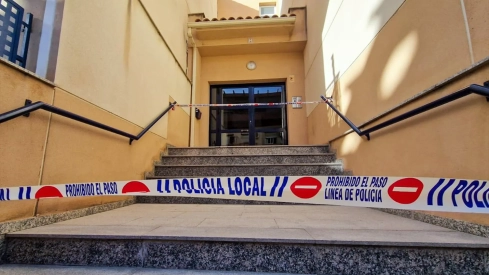
The Granada City Council maintains its emergency response deployed to assess the effects of the latest seismic movements. "We have all emergency services activated to review the situation," said Carazo, who detailed that seven streets remain cordoned off due to damage caused by the tremors.
Among the incidents registered are landslides in elevators, facade elements, wall collapses, and affected vehicles. In addition, the Alhambra will remain preventively closed to the public until the safety of the site can be guaranteed.
The municipal official explained that the teams will prioritize the areas that remain cut off and that they will join those points that were already being inspected since the magnitude 5 earthquake registered last Saturday. Given the possibility of new movements, Carazo has conveyed to the population the main self-protection recommendation: “If a tremor occurs, you have to go out and stand in line with the buildings, that is the best self-protection advice.”
The security device will also be reinforced in Granada with a greater deployment of the Local Police in the streets, with the aim of increasing the presence of agents and attending to the needs of citizens. According to the City Council, more patrols will be incorporated to "be closer, offer information and guarantee security".
Juanma Moreno asks for "maximum prudence"
The National Geographic Institute registered a new earthquake in Granada of magnitude 4.6 this Tuesday, with its epicenter in Gójar, after last Saturday's earthquake. In this context, the president of the Junta de Andalucía, Juanma Moreno, has spoken through his social networks to ask citizens for "maximum prudence." He also warned: "Experts indicate that it is possible that seismic movements and aftershocks will continue in the area."
In a publication on his official X account, he wrote: "Again an earthquake shakes Granada. Maximum PRUDENCE. Experts indicate that it is possible that seismic movements and aftershocks will continue in the area, and it is important to know how we should act in these situations. Let's follow the advice and maintain serenity, please."
Just a few days ago, a magnitude 5 earthquake shook a large part of Andalucía after its epicenter was located in Alhendín (Granada). The seismic movement was especially perceived in the provinces of Málaga, Jaén and Córdoba, although it was also felt in Murcia, Castilla-La Mancha, the Community of Madrid and Extremadura. According to data from the National Geographic Institute (IGN), the tremor was perceptible in more than 200 municipalities spread across five autonomous communities, although with different intensity.
The president of the Junta de Andalucía, Juanma Moreno, conveyed a message of tranquility, although he has asked to extreme precautions against possible damage to buildings. "A night of fright and unease in Granada with a magnitude 5 earthquake that has caused some material damage and was felt in several provinces," he said on his social networks. Moreno recommended paying special attention to cornices and facades that may have been affected and following the instructions of the emergency services.
The Junta itself warned that the seismic episode might not have ended. Emergency services indicated that during the next few hours or even days, aftershocks could be registered, a common phenomenon after an earthquake and which, they explained, does not have to imply a dangerous situation if self-protection recommendations are followed.
