Dozens of children queue in front of a building next to the church of San Ildefonso, in the Ceuta neighborhood of El Príncipe. They are looking for a pen and a small piece of paper to write their name, age, and a contact phone number. These are the data with which the neighbors themselves are trying to identify the migrant minors who remain outside the protection system.
The El Príncipe Neighborhood Association launched this improvised registry two days ago due to the constant arrival of children and adolescents in its streets. The list is already close to a thousand names and is kept as best as possible, on papers stored inside boxes, while the organization awaits the help promised by the Red Cross to organize all the information.
"Most are from 2009," explains one of the neighbors participating in the initiative. Many are 16 or 17 years old, although among those seeking help there are also younger children who crossed the border without their families.
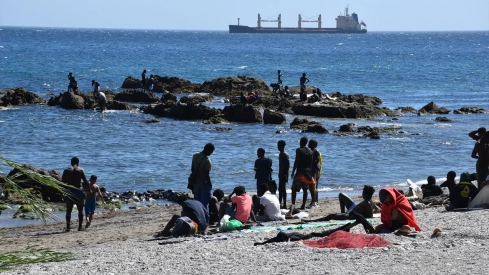
The neighborhood registry allows knowing who they are and where they are, but it lacks any administrative value. Official identification, age verification, and the protection of each minor correspond to the authorities. While these procedures advance, numerous young people continue to sleep on the street, in the vicinity of the El Tarajal warehouses or inside the homes of neighborhood families.
The neighborhood opens its homes
Neighbors have been distributing water, clothes, and food for almost a week. Some families have taken in minors alongside their own children because the facilities prepared by the City were full. Large pots of couscous, lentils, and stews are cooked in the doorways and then distributed among those who walk through the neighborhood looking for help.
One of the residents, Raiba, has two young people sleeping in her home. "I have already defrosted everything I had in food reserves, I don't even have a chicken left," she says after several days attending to those who have arrived on her street.
The mobilization offers an image far removed from the stigma that has accompanied El Príncipe for years. One of Ceuta's most impoverished and singled-out neighborhoods is taking on with its own resources a part of the emergency that the administrations have not yet managed to channel.
The inhabitants remember a similar situation during the 2021 migratory crisis, when they also temporarily hosted minors before their transfer to centers on the Peninsula. This time, the dimension is much larger. Around 72,000 people crossed into Ceuta during last week's massive entry and about 70,000 have already returned to Morocco.
Authorities estimate that some 2,500 people still remain in the city. The Ceuta government places the number of minors who arrived before and during the crisis at around 1,100, although the figure continues to change as young people who were sleeping in houses, on beaches, in cemeteries or industrial spaces appear.
Ceuta multiplies its capacity by 38
Ceuta officially attended to 862 minors last Monday and already expected to exceed a thousand. Its ordinary capacity is set at just 29 places, so the system now supports around 38 times the number of minors for which it was designed.
The City is conditioning an industrial building and another warehouse in the El Tarajal industrial estate to expand provisional accommodations. It has also begun to prepare the necessary files to transfer minors to other communities through the mechanism approved in 2025 for situations of migratory contingency.
The central government has allocated 25 million extraordinary euros to Ceuta and demands that the communities comply with the mandatory distribution. The regulations allow minors to be transferred from territories that triple their ordinary capacity once individual identification is completed and the situation of each child is studied.
This procedure takes time and immediate assistance continues to fall largely on El Príncipe. The boxes with almost a thousand names continue to fill up while neighbors look for food, beds and pens for the minors who arrive every day at the church of San Ildefonso.
Add ElConstitucional.es as a preferred Google source for free.
Stay informed about all the latest breaking news with the best information. Against disinformation, for democracy and social rights.
