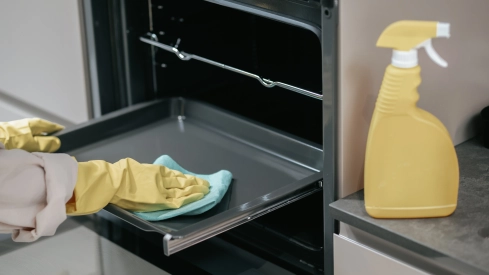
Cleaning oven trays is one of the household chores that is most often postponed. Food residues, oil, and grease accumulated during successive uses end up forming dark and difficult-to-remove stains, especially when they have been adhered to the surface for months.
However, there are some methods to restore these utensils without resorting to specific chemical products. The American magazine Southern Living has gathered several tips from baking and kitchenware experts to remove ingrained dirt using common household ingredients, such as baking soda, hydrogen peroxide, white vinegar, or dish soap.
Among the proposed alternatives, a mixture of baking soda and hydrogen peroxide stands out, which, applied as a paste and left to act for a few minutes, helps to soften accumulated residues to facilitate their removal.
How to clean oven trays with baking soda and hydrogen peroxide
One of the methods recommended by Jennifer Behar, baker and founder of Jennifer's Homemade, consists of preparing a paste with baking soda and hydrogen peroxide. To put it into practice, you need half a cup of baking soda, two to three tablespoons of hydrogen peroxide, a small container, gloves, and a scourer suitable for the tray's surface.
The procedure consists of several steps:
- Remove food residues: rinse the tray with water to remove loose particles.
- Dry the surface: use a clean cloth or kitchen paper before applying the mixture.
- Prepare the paste: mix half a cup of baking soda with two or three tablespoons of hydrogen peroxide until it reaches a toothpaste-like consistency.
- Spread the mixture: distribute the paste over the entire surface of the tray, especially in areas with accumulated grease and dirt. It is advisable to use gloves.
- Let it act: wait 15 to 20 minutes for the mixture to soften the ingrained residues.
- Scrub the surface: use a suitable scourer to remove the dirt.
- Rinse with warm water: remove all traces of the mixture.
- Dry completely: use a clean cloth or kitchen paper before storing the tray.
The key to this method is to let the paste act before starting to scrub. This way, food and grease residues can be removed more easily.
Two other homemade methods to remove embedded grease
In addition to the baking soda and hydrogen peroxide mixture, Southern Living collects two other alternatives for cleaning oven trays using common cleaning products. The first combines baking soda and white vinegar. To apply it, the tray must first be rinsed and dried, cover its surface with baking soda and add white vinegar on top. The reaction between both products generates an effervescence that helps lift the dirt.
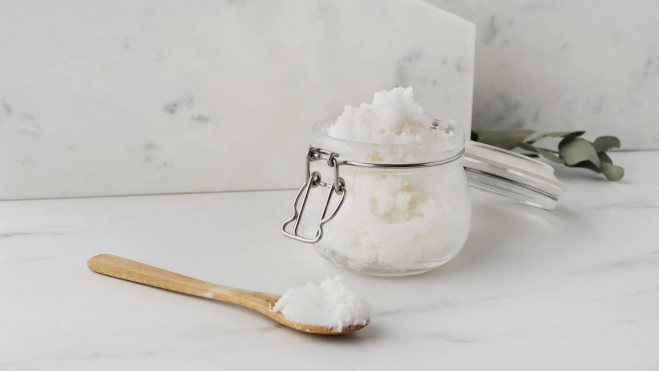
Afterwards, it is recommended to let the mixture act for 15 to 20 minutes, scrub with a scourer, rinse with warm water and dry. The second option consists of using baking soda and dish soap. The procedure is similar: first, food residues are removed, then baking soda is sprinkled over the dirty areas and a small amount of soap is added. A paste can also be prepared by mixing both ingredients in a container. After letting the mixture rest for 15 to 20 minutes, the surface is scrubbed, rinsed and dried.
How often should oven trays be cleaned?
Beyond removing tough stains, maintaining a cleaning routine helps prevent grease from accumulating over time. According to Jennifer Behar, it is advisable to gently wash the trays with soap and water after each use and reserve a deeper cleaning for every few months in the case of regular household use.
It is also important to consider the material of the utensil. Missy Stefanik, senior product manager at GoodCook Bakeware and Food Storage, warns that aluminum trays should not be put in the dishwasher. In the case of non-stick ones, although some manufacturers allow the use of this appliance, detergents can progressively deteriorate their coating. For this reason, experts recommend prioritizing hand washing with warm water and soap, followed by drying with a cloth.

Likewise, they advise against using steel wool scourers or abrasive cleaners, especially on non-stick surfaces, because they can damage the coating. To prevent future grease buildup, another recommendation is to use baking paper during food preparation. In this way, regular cleaning and some ingredients that are usually present in the kitchen can help keep trays in better condition and extend their useful life.
Contact
We are listening. Get in touch.
