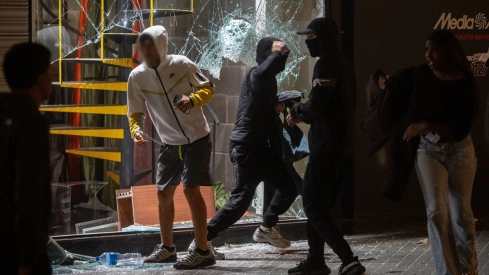
Barcelona experienced last Saturday, October 24, a day of serious disturbances after hundreds of young people mobilized through social networks under the hashtag 'Blocus'. What was initially presented as a protest against the situation of public education ended up becoming a series of looting, robberies, and fires in different parts of the city.
The call was mainly disseminated through TikTok, where several anonymous accounts shared posters and videos to encourage young people to participate. However, behind the supposed demonstration there was no organized demand, but a mobilization that ended up causing almost four hours of altercations.
According to data from the Mossos d'Esquadra, the riots resulted in the looting of about thirty establishments and 33 fires. The Catalan police have opened an investigation to find out who created the profiles that disseminated the messages and if there is an organization behind them.
What does Blocus mean and how was the call organized on social media?
The word 'Blocus' comes from French and means blockade. The term has been used in student protests in France and has spread as a label to mobilize young people in different European countries. In Barcelona, the promoters used this word to shape a call that, according to the disseminated posters, aimed to protest the quality of education in high schools. However, Saturday's events ended up moving away from any educational demand.
The Mossos are investigating several anonymous TikTok accounts that published the messages to gather participants. For now, it is not known who is behind these profiles or if they all belong to the same group. Some of the accounts that disseminated the call have already disappeared. The technologist Marcelino Madrigal, who has followed the activity of this movement on the internet, believes that there could be a political or geopolitical interest behind its creation.
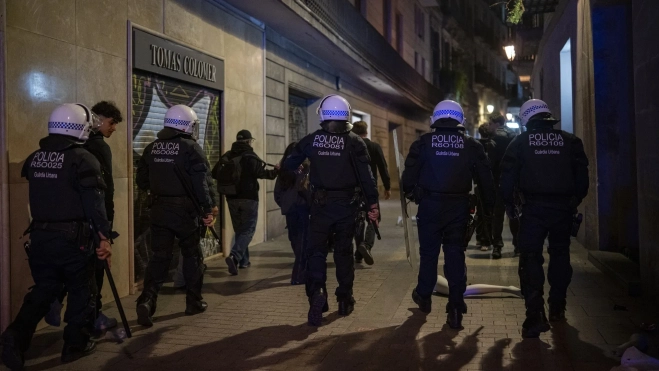
The dissemination was not limited to TikTok. The posters included QR codes that allowed access to WhatsApp groups, while other participants used Telegram to organize the meetings. In these spaces, instructions were shared about the clothes they should wear, the meeting places, and the routes they would follow. In addition, investigators have detected messages preparing a new call for Saturday, October 31, in Barcelona, with the intention of attacking commercial establishments again.
How many people have been arrested for the riots in Barcelona?
Last Saturday's altercations ended with 130 people arrested by the Mossos d'Esquadra. Of these, 123 were men and seven women. Among those arrested there is also a significant number of minors: 74 boys and two girls. The police investigation has also focused on the backgrounds of some of the detainees. Specifically, 25 people had previously been investigated for crimes related to theft, robbery, or injury. Two of them had a history of participating in altercations.
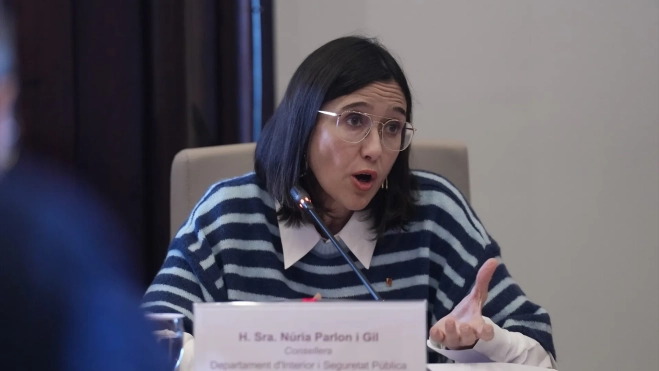
For her part, the Minister of Interior of Catalonia, Núria Parlon, has rejected that the looting was a consequence of a social demonstration. According to her explanation, the participants directly began to enter establishments and take products, without a protest concentration taking place beforehand.
The Mossos continue to review images of the riots to identify the people who participated in the robberies and clarify who organized the call that ended up causing chaos in Barcelona. New calls have also been disseminated on Telegram channels, some of them with calls to commit robberies and cause altercations. The Catalan police maintain the investigation open to identify those responsible.
