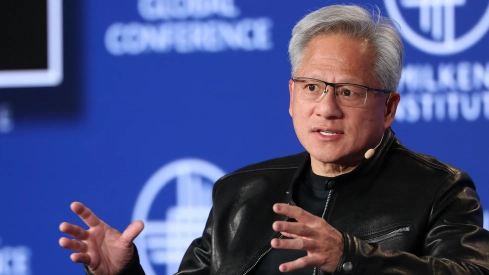
The future of Nvidia is once again at the center of international technological news. Jensen Huang, co-founder of the company and until a few days ago its CEO, is reportedly considering returning to lead the company after submitting his resignation last Thursday. According to the 'Financial Times', the businessman has spoken with trusted individuals about a possible return, while several Silicon Valley allies are preparing a campaign to pressure the board of directors.
Huang's departure occurred after reports surfaced about several extramarital affairs, including one with a subordinate and another with a Chinese woman identified as an alleged spy. These revelations caused a crisis in Nvidia's management and opened a debate about the company's internal controls and their possible implications for the security of its commercial operations with China.
Despite his resignation, the businessman still has the support of a part of the technology sector. Some of his allies believe that his experience at the helm of Nvidia is fundamental to maintaining the company's position in the global chip and artificial intelligence market.
Elon Musk and other entrepreneurs mobilize to bring Huang back
The possible return of the businessman has begun to gain support among some of the most well-known figures in Silicon Valley. According to the 'Financial Times', a group of allies is organizing a kind of lobbying team, described as a "war room," to convince the board of directors to allow his return. They would also seek the support of the White House.
Among those who have publicly supported the initiative are Elon Musk, CEO of Tesla and SpaceX, and Tim Sweeney, founder of Epic Games. Both have endorsed an open letter calling on Nvidia's management to "bring Jensen back." The campaign also has the support of Brad Gerstner, founder of Altimeter Capital, and Gavin Baker, director of Atreides Management and shareholders of the technology company. Both published a letter in which they asked the board to keep all options open, including Huang's possible return.
However, the support of his allies does not guarantee that he can regain the position. The decision rests with the board of directors, which must assess the consequences of the crisis and the result of the internal investigation into the conduct of the former CEO.
Nvidia seeks a replacement as political pressure grows in the United States
Following Huang's resignation, Nvidia appointed Colette Kress, previously executive vice president and chief financial officer, as interim CEO. The company has begun the search for a permanent replacement and is considering both internal and external candidates. Among the names that have appeared in the pools is René Haas, CEO of Arm, with whom, according to the 'Financial Times', Nvidia's board would have contacted to explore his possible incorporation.
The crisis has also reached Washington. U.S. Treasury Secretary Scott Bessent called for a "drastic reorganization" of Nvidia's management after Huang's departure. The political concern is related, among other issues, to the possible consequences of the information about the businessman's alleged relationship with a woman identified as a Chinese spy and the controls on the export of advanced artificial intelligence chips to the Asian market.
Nvidia, one of the most important companies in the global technology sector for its role in the development of processors for artificial intelligence, thus faces a period of uncertainty in its management. While its allies work to facilitate Huang's return, the final decision remains in the hands of its board of directors.
Contact
We are listening. Get in touch.
