The European Union has intensified its critical discourse towards Israel, but still fails to achieve a common position on possible concrete measures. During the Council of Foreign Ministers, several countries raised the tone in the face of what they consider violations of international law, although the differences between Member States prevent progress towards more significant decisions.
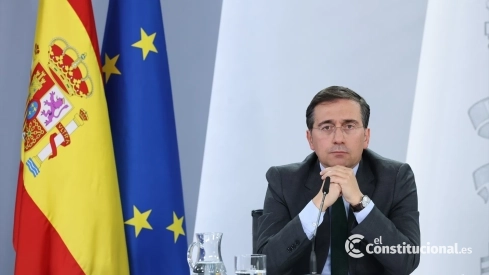
The Spanish Minister of Foreign Affairs, José Manuel Albares, led the request to suspend the association agreement with Israel, warning that the EU is risking its credibility. “If we are not capable of sending a clear and strong signal, we will lose our credibility,” he stated, nevertheless opening up to studying other measures if there is no consensus for a total suspension.
Spain, along with Ireland and Slovenia, had formally requested to debate this suspension alleging human rights violations by the Israeli Government. However, the adoption of this measure requires unanimity among the Twenty-Seven, a requirement that, for now, seems distant. Even more limited options, such as suspending trade advantages, have not managed to gather the necessary majority either.
From Ireland, Foreign Minister Helen McEntee insisted that the EU must be consistent with its fundamental values. She especially criticized new laws promoted by Israel that, she affirmed, penalize the Palestinian people and introduce "totally unacceptable" measures, thus defending the suspension of the agreement or, at least, of its commercial part.
Along the same lines, Slovenian minister Tanja Fajon demanded to seriously address the violations of international humanitarian law in Gaza and the West Bank, while Belgian minister Maxime Prévot opted for a partial suspension as an intermediate way given the lack of consensus. Against these positions, Germany showed itself contrary to sanctions or suspensions of the agreement. Its Foreign Minister, Johann Wadephul, defended maintaining a “constructive dialogue” with Israel.
