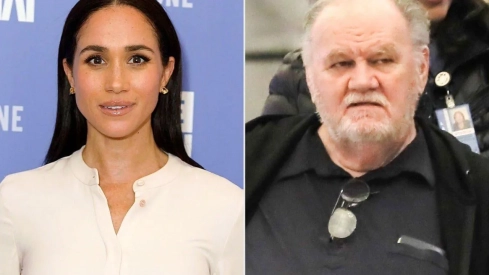
Thomas Markle has received three new charges in the Philippines and his legal situation once again hardens while he remains incarcerated in a Florida prison since November 10.
The accusation, released this Tuesday by British and American media cited in the information —such as The Telegraph and People magazine—, places Meghan Markle's father before a new criminal front: two of the charges refer to offering, distributing, selling or exporting child abuse material, and the third, to the possession of that content, according to the Philippine National Police (PNP).
A case that started in Cebu and ended up overwhelmed by two jurisdictions
The procedure started in the Philippines, where Thomas Markle Jr. reported his father after finding "hundreds, if not thousands" of videos and photographs in his Cebu residence. That complaint opened the first criminal avenue, but the case soon spread to the United States, where a parallel investigation began.
In that American investigation, authorities located pornographic material in two rented storage units in Los Angeles. For now, that finding supports the open case in the US for a crime of possession of child pornography, an indictment that can carry up to 20 years in prison if convicted.
Markle was arrested in Florida on November 6, was temporarily released, and re-entered prison on November 10, after attempting to cut off his electronic monitoring bracelet. That sequence, although decisive, does not close the file: now the new Philippine accusation is added and the case remains open in both countries. For now, the case is divided between the Philippines and the United States, with distinct but connected charges by the same investigation. What remains pending is the evolution of both procedures and the judicial response to the new imputations.
Contact