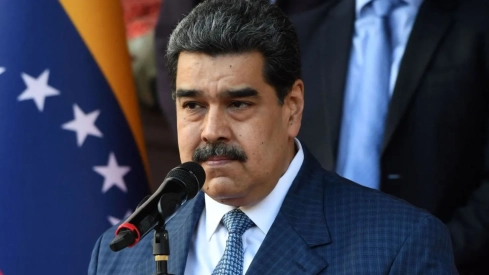
The U.S. Attorney's Office has filed a new indictment against former Venezuelan President Nicolás Maduro and his wife, Cilia Flores, for conspiracy to commit torture. The judicial document states that both participated in a system of repression based on arbitrary detentions, violence, and torture against political opponents, military personnel, and other detained individuals, including U.S. citizens.
The new indictment expands the case that both already faced before a federal court in New York for narcoterrorism, cocaine trafficking, and weapons-related offenses. The U.S. Attorney's Office maintains that repression was used as a tool to retain power and persecute those who opposed the Venezuelan government. Among the practices listed in the new judicial document are electric shocks, beatings, asphyxiation, threats against family members, and other forms of mistreatment. The Attorney's Office links these actions to a power structure that, according to its version, involved security forces and Venezuelan state agencies.
An indictment that focuses on the victims of repression
The new charge incorporates into the process several cases of individuals who, according to the U.S. Attorney's Office, were detained and tortured in Venezuela. Among the identified victims are three U.S. citizens. One of the described cases corresponds to a person identified in the file as "Victim 7," who was allegedly detained and tortured after being accused of participating in a supposed conspiracy to assassinate Maduro.
The Attorney's Office places some of these episodes between 2022 and January 2026. The judicial document states that the violence would not have been limited to isolated cases, but rather would be part of a strategy of repression against those considered a political threat. The Attorney's Office attributes a role within that structure to Maduro and Flores, although individual responsibilities and the strength of the evidence presented will be determined during the judicial process.
The new accusations come after years of human rights organizations' denunciations of arbitrary detentions and mistreatment in Venezuela. On this occasion, however, the accusations are part of a criminal proceeding opened in the United States and also focus on U.S. citizens detained in Venezuelan territory.
Maduro and Flores were already accused of narcoterrorism
The new charges are added to a case that was already especially serious. Maduro and Flores faced accusations of conspiracy to introduce cocaine into the United States and for possession and conspiracy to possess destructive weapons.
The Prosecutor's Office has also extended to Cilia Flores a charge of conspiracy to commit narco-terrorism that previously only affected Maduro. According to the new indictment, both would have conspired to distribute cocaine with the aim of providing resources to organizations considered terrorist by the United States. Maduro and Flores were captured on January 3, 2026, during an operation by US forces in Caracas and subsequently transferred to New York, where they remain detained awaiting the judicial process. Both have denied the accusations against them.
Aquí, las CLAVES de la segunda imputación de Maduro:
— David Alandete (@alandete) October 8, 2026
1. Maduro y Cilia son los 2 acusados. La Fiscalía sostiene que durante más de 25 años abusaron de cargos públicos para enriquecerse y mantenerse en el poder mediante corrupción, narcotráfico y graves violaciones de derechos… pic.twitter.com/VJ06evdiq6
Maduro's defense also questions the legality of his capture and has raised arguments related to his status as a former head of state. The trial is scheduled for June 2027, although various legal issues raised by the parties must be resolved beforehand.
Cilia Flores requests house arrest for health reasons
The new accusation coincides with Cilia Flores' legal situation, as she has requested to serve pre-trial detention under house arrest due to health problems. Her lawyers argue that Flores suffers from progressive cardiac deterioration that would have worsened during her months in prison and have asked the judge to allow her to remain in a supervised residence while the process continues. The Prosecutor's Office opposes the request and argues, among other reasons, that there is a risk of flight.
The hearing on this request is being held while the case incorporates the new torture charges. In this way, the case against the Venezuelan couple now adds a dimension directly related to alleged human rights violations and political persecution, in addition to the drug trafficking and arms accusations that were already on the table.
The US accusation therefore represents a new chapter in a process that places at its center the denunciations of torture suffered by opponents and detainees in Venezuela. The accusations will have to be proven during the trial, but the new indictment from the Prosecutor's Office significantly expands the scope of the case and scrutinizes the alleged use of repression as a political tool during Maduro's years in power.
