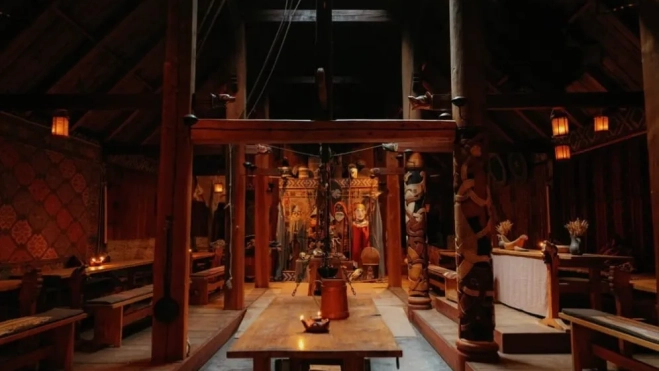
The Battle of Stiklestad, one of the most famous of the Viking Age, took place in a spot an hour and a half from Trondheim, Norway's first capital, and marked a turning point in the country's history.
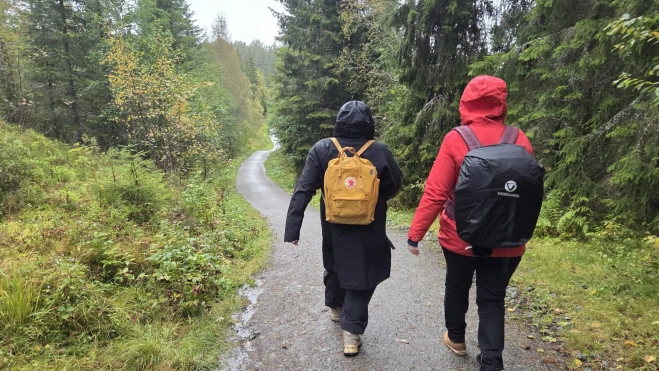
After this battle, Trondheim became one of the most important pilgrimage destinations, with nine official routes known as the St. Olav routes. Olav, a man who as a child of barely 12 years old took part in raids on Europe and who converted to Christianity after a short stay in France. With that intention, he returned to Norway. Without achieving his purpose, he had to go into exile until a dream while living in the Russian city of Novgorod convinced him that he should return and try again. In that context, the Battle of Stiklestad occurred, in which Olav was wounded three times before dying.
After the king's death, "miraculous" healings began to occur on the battlefield and next to the tomb on the banks of the Nidelva River where he had been buried. This was the first step on the path to sainthood. The next came when the bishop ordered his tomb to be opened and his body, which gave off a pleasant smell, was incorrupt. Before he became a saint, pilgrims embarked on a journey to visit the tomb, a ritual that continues and turns Trondheim into a celebration that in 2030, on the occasion of the jubilee, will be even greater.
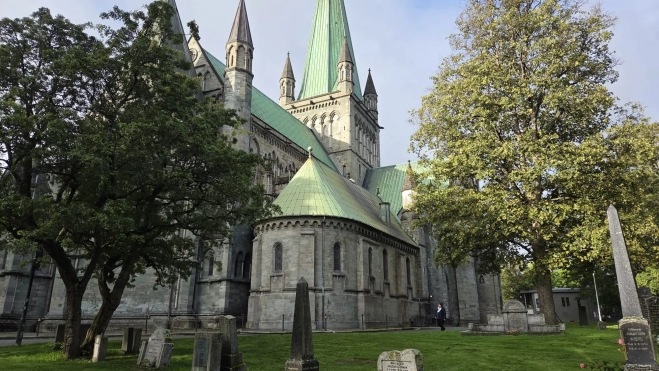
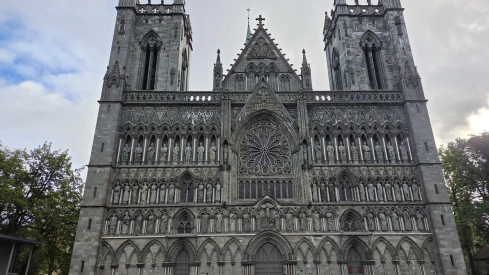
Nidaros Cathedral, a pilgrimage destination, remains one of Norway's most important sacred monuments, although Olav's legacy lives on throughout the region where stories of miracles intertwine.
Norway's history is woven with power struggles combined with unions and rivalries with Denmark and Sweden, neighbors with whom they shared a crown for a century in the Kalmar Union promoted by Queen Margaret I of Denmark, who achieved what Olav Haraldsson could not, despite his attempts.
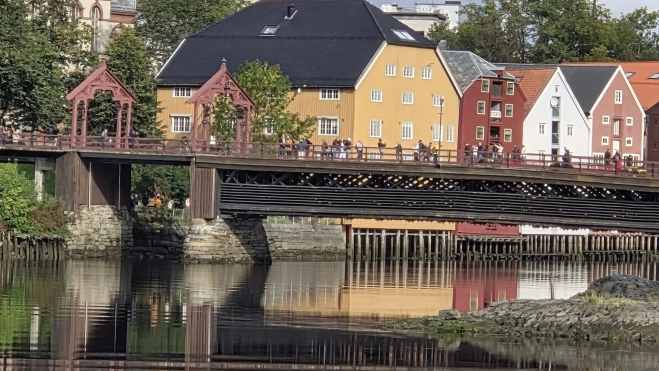
With a population of 213,000, the university city of Trondheim is Norway's "technology capital."