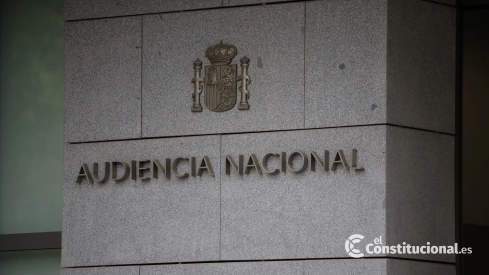
The Audiencia Nacional has made a move to reinforce its role in the fight against drug trafficking. The Governing Chamber of the court has submitted a proposal to the General Council of the Judiciary (CGPJ) in which it proposes to expand its powers to take on investigations related to criminal organizations dedicated to drug trafficking, especially those that use violence, operate at an international level or have complex structures.
The initiative comes just a few days after the death of two Civil Guard agents during an anti-drug trafficking operation off the coast of Huelva. The agents died after the collision of two Provincial Maritime Service vessels during a pursuit of a narco-boat on the high seas. Another two civil guards were injured in the operation.
According to the approach conveyed by the Anti-Drug Prosecutor's Office, the Audiencia Nacional should handle cases related to criminal networks that have a “relevant international dimension”, mobilize a large number of people, or use “especially sophisticated or violent” methods. The objective is to centralize the most complex investigations in a body with greater judicial and police resources than ordinary courts.
The proposal would also affect investigations such as that of Barbate, where two Guardia Civil agents died in February 2024 after a narco-boat rammed their vessel during a police operation. For the Fiscalía, drug trafficking has ceased to be a threat limited to drug trafficking to become a phenomenon with “powerful capacity for corruption” and a growing impact on security and trust in institutions.
Among the proposed measures, Antidroga also proposes that the Audiencia Nacional assume cases in which public officials, members of the State Security Forces and Corps, or members of the Customs Surveillance Service participate. It also demands that the court can intervene when there are especially complex money laundering operations or investigations that require judicial cooperation with several countries.
The institutional offensive reflects the growing concern within the judiciary and the Prosecutor's Office over the rise of drug trafficking in areas of southern Spain, especially in Andalusia. Both the Anti-Drug Prosecutor's Office and the National Court consider that drug trafficking structures have gained economic, logistical, and violent capacity in recent years, forcing a rethinking of the judicial model with which these types of criminal organizations are combated.
