The weekend begins with a calmer situation in the autonomous city of Ceuta. Of “normality,” according to the Government of Spain. The massive arrival of people from Morocco this week has generated a local, national, and even diplomatic crisis with other European countries that the Executive is now trying to redirect.
With more than 60 people deceased —according to the latest data provided to EFE by police sources—, it is one of the worst episodes in the recent history of the city of Ceuta, which these days has once again recalled the incident that occurred in 2021, with similar images, although at other levels in terms of the number of people involved.
The order that the Executive tries to reflect is based on another figure. According to the Ministry of Foreign Affairs reported early today, of the nearly 50,000 people who crossed irregularly, more than 48,000 —that is, practically all— have already been returned to Morocco in less than 48 hours.
However, the Ceuta authorities, the political opposition, and the movements of some neighboring countries, such as France or Italy, oblige La Moncloa to continue updating a political strategy that, in the first place, involves obtaining the collaboration of the Kingdom of Morocco.
Surprise assault
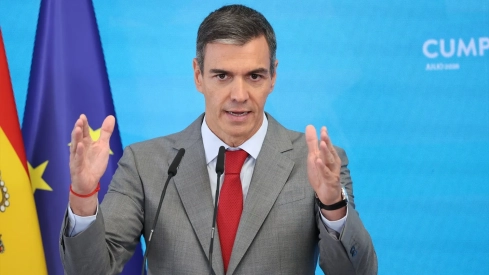
“We had no information indicating the massive entry that occurred.” With these words, the Government of Pedro Sánchez acknowledges that they did not see the Ceuta crisis coming.
La Moncloa had been focusing the strategy of the President of the Government, Pedro Sánchez, as well as some of the main ministers, including the Minister of Interior, Fernando Grande-Marlaska, for days on what are already the worst fires in history, with more than 50,000 hectares devastated in Madrid, Ávila, Toledo, and Castellón. An environmental catastrophe that was also not on the agenda and that marked the close of the legislature and even the annual balance that the President of the Government himself made last Tuesday before journalists.
By then, the Civil Guard and the Ministry of Interior already had reports reflecting the gradual increase in attempts to enter Ceuta by swimming. A growing evolution during recent weeks that, however, did not point to what subsequently happened.
Nor from a diplomatic point of view were there any alarm signals. King Mohammed VI defended on Thursday the "security" and "stability" that Morocco enjoys, as well as the initiatives promoted by his Government to improve the living conditions of Moroccans, within the framework of a speech for his 27 years on the throne.
On this occasion, there was no formal complaint from the Government of Morocco that raised the alarm, although international relations experts consulted point to the impact of the recent boost in bilateral relations between Spain and Algeria —which broke the friendship treaty with our country on June 8, 2022— and which, now, with those relations re-established, would have made the Alawi Kingdom uncomfortable.
Collaboration with Morocco and anger with EU countries
Throughout history, it has been shown that the collaboration and vigilance of the Moroccan authorities are essential to order the Spanish border, which is also the southern limit of Europe.
Now it will be diplomatic relations and police investigation that, in the coming days, will offer an official answer about what has failed for more than 60 people to have died on our coasts and more than 50,000 to have doubled the population of the autonomous city in a few hours.
While a recent ruling by the Supreme Court is being debated, which determined that those who swim into Ceuta and Melilla cannot be returned in hot pursuit, the Ministry of Foreign Affairs insists that "entering irregularly does not give the right to remain in Spain, nor to travel to the Peninsula, nor to circulate through Europe." They also add —as a direct message to the PP, Vox and all citizens who, intentionally and inaccurately, have spoken of invasion— that no person arriving in Ceuta "has left the city for the Peninsula, nor would they have been able to do so."
In this situation, and aware of the necessary collaboration with Morocco, from the Ministry of Foreign Affairs, headed by José Manuel Albares, they point to joint work and "maximum collaboration" with the authorities on the other side of the waters. A political message, which with all the nuances one wants, has become necessary to keep communication channels clear. Meanwhile, Sumar's minority partner points to Morocco's coordinated interests with third countries and far-right forces to "destabilize" the country.
In parallel, the Chief Executive, Pedro Sánchez, has sent a letter to the President of the European Commission, Ursula von der Leyen, in which he criticized several European governments for choosing to "attack" Spain after the massive entry of migrants into Ceuta. In the same letter, he requested an urgent meeting of European Union Interior Ministers.
All this after French President Emmanuel Macron ordered the Ministry of Interior to take "all appropriate measures to reinforce controls at the border with Spain" and after Giorgia Meloni's government suspended the agreement on the free movement of people in Europe, known as the Schengen Agreement.
The government thus faces a difficult diplomatic balance. The priority is to restore normality in Ceuta and prevent a similar episode from happening again, but any strategy needs the collaboration of Morocco, while the Executive must contain the discontent of some European partners and respond to internal political pressure. The management of the crisis therefore forces La Moncloa to move on several fronts at once, aware that any movement can have consequences beyond Ceuta's own border.
Add ElConstitucional.es as a preferred Google source for free.
Stay informed about all the latest breaking news with the best information. Against disinformation, for democracy and social rights.