In 2021, more than 10,000 people entered Ceuta; this time, more than 70,000. That is why July 30, 2026, will go down in history: for the magnitude of the events, for the number of deceased people, for the crisis generated in the city itself, which still persists, for the diplomatic tension and for the domestic political confrontation.
The summer has not escaped tension, exasperation, and confrontation, and in those terms, the political season will begin next week, earlier than usual. On Tuesday, the Council of Ministers will meet again at the Moncloa Palace, and six ministers will appear in Congress to address the crisis in Ceuta.
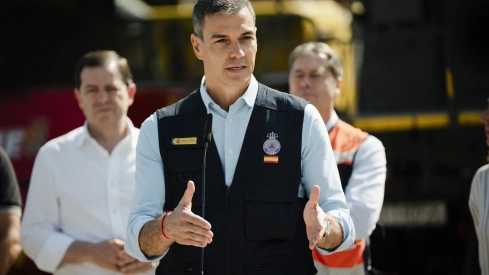
From the holiday residence of La Mareta, the President of the Government, Pedro Sánchez, has presided over several meetings by videoconference. In addition, several ministers involved in the management of the crisis have traveled in recent weeks to hold in-person working meetings, trying to place the Executive leader at the forefront of the management. However, it will be on Tuesday when the Government will meet again in person and as a whole after the summer break.
The week will be marked by the appearances of up to six ministers who will speak in committee, in extraordinary sessions, since the ordinary period does not begin until September.
What remains to be done
The lack of harmony between the central government and the Ceuta executive makes it difficult to find solutions that allow the autonomous city to return to a greater situation of normality.
Pedro Sánchez's Government is preparing a package of aid to reactivate the economy of the area, diminished by the situation. As reported by the newspaper El País, the Executive is studying approving possible tax reductions, reductions in contributions, and direct aid to those affected by the crisis.
In parallel, the deployment of resources still does not prevent thousands of migrants from continuing to transit through the streets. All this while the proposal to transfer 500 girls to the Peninsula remains pending, an operation that the Ministry of Youth and Childhood hopes to carry out "within a few weeks."
Fertile ground for the far-right
Congress will host, albeit extraordinarily, the beginning of the political season with the focus clearly shifted towards the postulates of the far-right.
While VOX insists on "hunting" migrants, the PP advocates for the return of all individuals, including minors, contradicting what European and national legislation dictates. Positions that both formations will set in the coming days in the lower house before government representatives.
This migratory crisis in Ceuta, which hides interests of third countries that use people for their own ends, serves the far-right as a catalyst to consolidate an ideological framework based on national security and identity clash. More national priority than ever.
Any criticism of the government's management on the ground is legitimate—with clear deficiencies in the agility of decision-making and communicative initiative—. But Feijóo's Popular Party will be wrong if it thinks that a crisis of these characteristics is circumscribed only to this government and that it could not be repeated if it someday reaches Moncloa.
When a crisis feeds a political framework
The question that transcends the specific management of this crisis is what political consequences the narrative built around it leaves. Ceuta has become an especially propitious scenario for immigration to stop being addressed as a matter of border management, international cooperation, or reception capacity and to be placed in the realm of identity, security, and fear.
Ceutans accumulate reasons for complaint, frustration, and anger. But the response to that discomfort will also determine what kind of society remains after the crisis. Spreading hate speech, fueling tension, or turning any conflict into a permanent confrontation can offer immediate political returns, but it leaves a social cost much more difficult to reverse.
That is where the ground becomes especially fertile for the far-right. It does not necessarily need to govern to transform the framework of the debate: it is enough for it to get the rest of the political actors to end up discussing under its own terms. If public conversation is reduced to who is capable of hardening the discourse more, the political debate will have changed its scenario.
Power in Moncloa can change color. What is more difficult to change is the social climate that has been built in the meantime. And therein lies the true political battle: not only in who manages a crisis, but in what narrative remains when the crisis ends.
If the ground is fertilized with fear, hatred, and racism, the problem does not disappear when the government in power disappears. It stays in society.