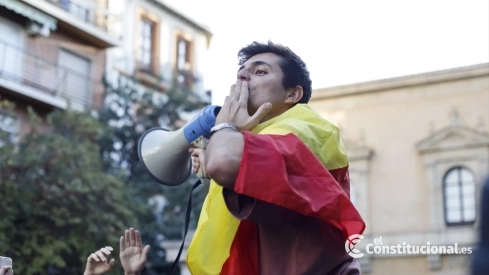
The Congress Advisory Council has classified the incidents involving Vito Quiles and Bertrand Ndongo as serious infractions, considering that their actions significantly affected the work of other journalists accredited to the Chamber. Now, the Congress authorities will decide whether to proceed with suspending or revoking their press credentials, temporarily or permanently.
The complaints arose after several altercations within the Palace of the Carrera de San Jerónimo. Quiles, accredited by EDATV, was singled out for filming in unauthorized areas and for pursuing prominent political leaders with his camera, including former Prime Minister José Luis Rodríguez Zapatero and President Pedro Sánchez, subsequently sharing those images on social media despite warnings received and out of context.
Ndongo, accredited by Periodista Digital, was reported after repeatedly interrupting a press conference by the spokesperson for Sumar, Verónica Martínez Barbero, ignoring instructions for the Congressional staff's turn and causing disruptions that hindered the work of other journalists present who could not do their jobs.
According to the **Rules of Congress**, serious infractions can lead to the **suspension of accreditation for between 11 days and three months**, while very serious offenses can result in the **definitive withdrawal of the pass**, especially if the conduct occurs repeatedly or is very detrimental to the normal functioning of parliamentary activity.If a sanction is applied, the sanctioned journalist's outlet will not be able to replace them during that time, which would leave the outlet without representation in Congress's informational activities for the duration of the suspension.
Those responsible in Congress will review the reports and, if they decide to initiate disciplinary proceedings, they will appoint a lawyer in charge of the case who will give Quiles and Ndongo a deadline to present their arguments before making a final decision.
Add ElConstitucional.es as a preferred Google source for free.
Stay informed about all the latest breaking news with the best information. Against disinformation, for democracy and social rights.