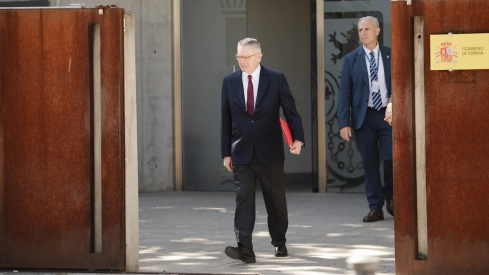
The former president of the Community of Madrid Alberto Ruiz-Gallardón defended this Tuesday before the Audiencia Nacional the purchase of the Colombian company Inassa by Canal de Isabel II. The former PP leader maintains that the operation had favorable reports, was profitable and did not cause "absolutely any" damage to public coffers or to the water service of Madrid residents.
His statement as a witness has occupied one of the most relevant days of the first trial of the 'Lezo case', opened to clarify whether Canal paid in 2001 an overprice of between 19 and 29 million euros for the acquisition. The public company disbursed 73 million dollars to acquire 75% of Inassa, as part of the international expansion plan promoted during the Gallardón era.
The Anti-Corruption Prosecutor's Office maintains that the public money used far exceeded the real value of the assets and benefited the sellers. The accusation places criminal responsibility on 22 former counselors, technicians, managers and intermediaries, including Pedro Calvo and Juan Bravo, two former counselors of Gallardón's Madrid government.
The former regional president appears outside the dock. He was investigated during the instruction, but the judge dismissed the case against him. Before the court, he assured that he knew the general purpose of expanding Canal, although he was unaware of the details of the operation and had the first concrete news a few days before it reached the Governing Council.
A 73 million purchase executed through Panama
The Madrid Executive authorized the creation of Canal Extensia, the acquisition of 75% of Inassa and the necessary indebtedness to finance the purchase. The proposal occupied point 93 of the 96 included in the agenda of the Governing Council and went ahead without a detailed debate, according to the former regional officials.
The operation ended up being executed indirectly. Canal Extensia, also participated by the private company Tecvasa, bought Sociedad de Aguas de América (SAA), a company based in Panama that owned 75% of Inassa. Its assets also included 51% of the Dominican company Watco, dedicated to collection management software programs.
Anti-Corruption considers that this structure deviated from what was authorized and allowed an unjustified overpayment with public funds. Its provisional conclusions estimate this excess to be between 19,066,500 and 29,013,109 euros, allegedly paid "for the exclusive benefit of the sellers." The first trial of the 'Lezo case' began ten years after the investigation started.
Gallardón has acknowledged that he was unaware of both the intervention of the Panamanian company and the incorporation of Watco. Even so, he has defended that he would have approved the purchase anyway because the use of shell companies is common in commercial operations and because all legal and budgetary reports were favorable.
The former Madrid president has also rejected that it was the responsibility of the Governing Council to oversee public companies. That task fell, he explained, to the Court of Accounts. "At no time could I have the slightest doubt," he declared before recalling that the Canal's Board of Directors had political, municipal, and union representatives.
In response to questions from the parties, Gallardón has insisted that Inassa generated profits and that its revaluation demonstrates that the purchase was "approved by the market". He has also assured that the Canal maintained a "model" service in Madrid throughout its international expansion.
The former Minister of Labor Luis Peral has supported the version that the operation arrived closed to the Governing Council and accompanied by the mandatory reports. He admitted, however, that no one informed him that the Canal was buying a Panamanian company and that he learned of this fact 17 years later, when he was summoned during the investigation.
The documentation examined during the trial also shows that the minutes of the Canal's Board of Directors did not include the interposed company or the acquisition of Watco. Its then secretary, Ángel Varona, has attributed these absences to the succinct nature of the document and has denied having received orders to conceal information.
Cobo points to "friendly fire" within the PP
The other highlight of the day came with the statement of Manuel Cobo, former Minister of the Presidency and former number two of Gallardón. The witness has assured that the procedure originated from a "political operation" promoted years later from within the ranks of the Popular Party itself.
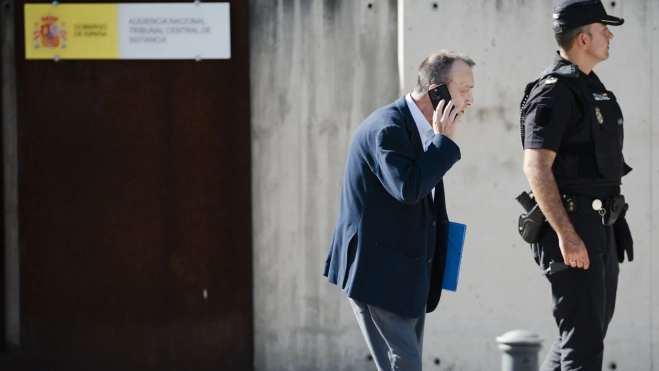
Cobo has directly pointed to the former Madrid president Ignacio González and the then manager of Canal, Ildefonso de Miguel. According to his account, both promoted several reports from the consulting firm Cuatrecasas whose valuation of the purchase progressively worsened. In one of the copies, indications appeared intended to present the operation as "very negative," he assured.
He also recalled a conversation recorded by the Central Operative Unit (UCO) of the Civil Guard between González and former minister Eduardo Zaplana. "What a big hit Gallardón made," they stated during that dialogue. Cobo believes that both knew they were being recorded and has accused González of trying to "defame" a party colleague. His statements are part of his testimony as a witness and must be evaluated by the court.
Ignacio González was left out of this piece because he was not yet presiding over Canal when the purchase of Inassa was closed. He is accused in other branches of the 'Lezo case' related to the Canal golf course, the acquisition of the Brazilian Emissao, and an alleged bribe of 1.8 million linked to the Navalcarnero train.
The Prosecutor's Office requests for Pedro Calvo and Juan Bravo seven years in prison and 15 years of absolute disqualification for alleged crimes of embezzlement and prevarication. For the other 20 accused, it demands between six and seven years in prison. It also demands that the 22 defendants jointly return more than 19 million euros to Canal if the court considers the overprice proven.
Add ElConstitucional.es as a preferred Google source for free.
Stay informed about all the latest breaking news with the best information. Against disinformation, for democracy and social rights.
